Winter puts commercial metal roofs through brutal conditions. Freeze-thaw cycling loosens fasteners, snow loads separate seams, and temperature swings create thermal stress that accumulates over months. When spring arrives, Columbus building owners face a decision: address damage now or wait until problems worsen. Understanding the optimal repair timeline, damage assessment process, and contractor selection criteria determines whether you protect your investment efficiently or pay emergency prices later.
Top Notch Commercial Roofing specializes in metal roof restoration for commercial properties throughout Central Ohio. We understand the specific damage patterns Ohio winters create and the tight scheduling windows spring provides. This guide explains why March through May offers ideal repair conditions, what winter damage looks like on metal roofs, and how to plan a timeline that minimizes disruption while maximizing results.
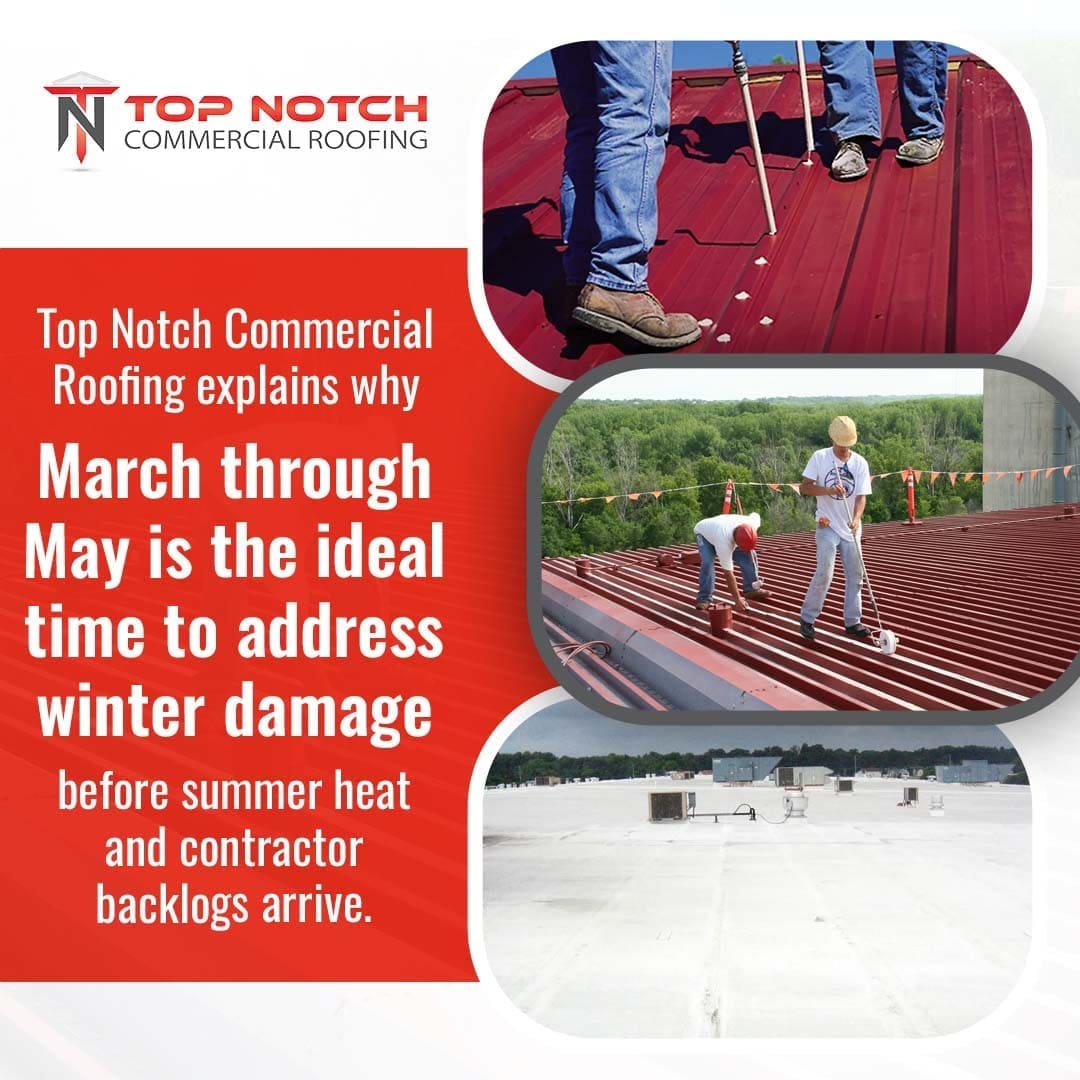
Why March Through June Offers the Optimal Window for Restoration Work
Temperature Requirements for Coating Applications
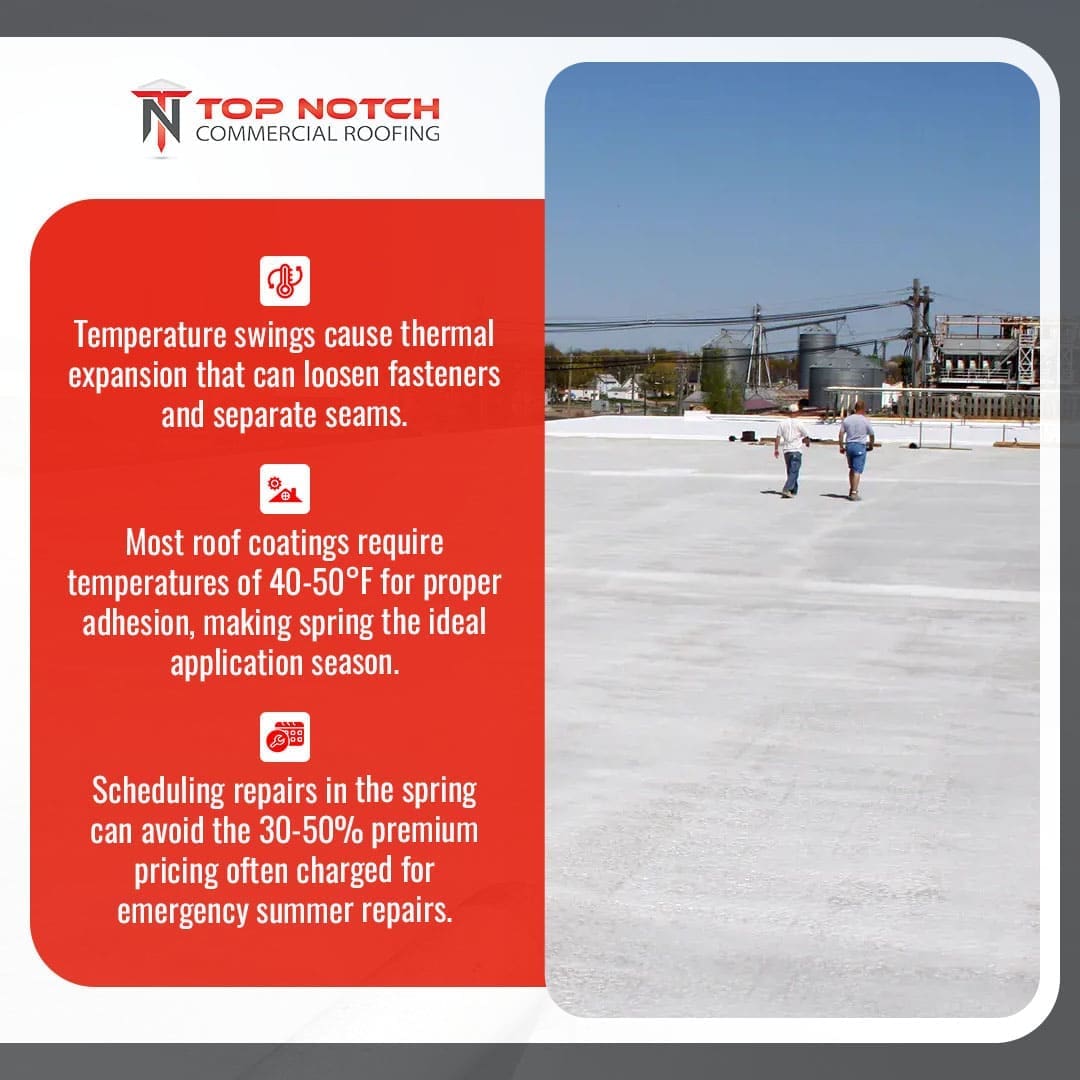
Metal roof coatings require specific application temperatures to cure properly. Most manufacturers specify minimum sustained temperatures of 40-50°F during application, with surface temperatures at least 5°F above the dew point to prevent condensation during curing. Applying coatings below these temperatures causes poor adhesion, incomplete curing, and premature failure.
March through May in Columbus provides consistent daytime temperatures above 50°F with decreasing risk of overnight freezes. Summer heat creates different problems: surface temperatures exceeding 125°F cause coatings to dry too quickly, creating application defects. Spring temperatures between 55 and 75°F create ideal conditions for both mechanical repairs and coating applications.
Contractor Availability and Budget Alignment
Spring represents the sweet spot before summer scheduling bottlenecks develop. According to construction industry employment data from the Bureau of Labor Statistics, roofing contractor activity peaks during warmer months, with spring representing the transition period when demand begins climbing sharply before summer scheduling bottlenecks develop. By summer, most competent metal roofing contractors carry full schedules extending 6-8 weeks into the future.
Smart property managers schedule assessments in February for March execution, securing contractor availability before prime season fills calendars. Spring repairs align with new fiscal year capital expenditure allocations, allowing proper budgeting versus emergency winter repairs that blow through contingency funds.
Weather Pattern Advantages
Columbus’s spring weather, according to the U.S. Climate Data for Columbus, Ohio, provides a higher probability of dry work days compared to the summer thunderstorm season. March averages 11-12 precipitation days, April 13 days, and May 13 days. Spring precipitation typically arrives as steady rain that forecasters predict 48-72 hours in advance, allowing contractors to plan around weather systems. Summer thunderstorms develop rapidly, giving minimal warning and creating safety hazards.
| Month | Avg. High Temp | Precipitation Days | Contractor Benefits |
| March | 52°F | 11-12 days | Lower demand, better scheduling |
| April | 63°F | 13 days | Moderate temperatures, predictable weather |
| May | 73°F | 13 days | Optimal conditions before summer peak |
| June | 82°F | 12 days (+ storms) | High demand, scheduling delays common |
Winter Damage Patterns on Commercial Metal Roofing Systems
Fastener Thermal Expansion Issues
Metal roofing fasteners experience thousands of expansion-contraction cycles each winter. According to thermal expansion coefficient data, steel has a coefficient of thermal expansion of 0.0000065 per °F, meaning a 100-foot panel experiencing a 100°F temperature change will expand nearly 0.78 inches. Ohio winter temperature swings of 60-70°F between afternoon highs and overnight lows create continuous fastener movement that works screws loose from deck materials, separates washers from panel surfaces, and fails seal integrity around penetrations.
Walk the roof surface looking for raised fastener heads. Fasteners sitting 1/16 inch or more above panel surfaces indicate back-out problems. If 10% or more fasteners per 100-square-foot section show back-out, comprehensive re-fastening becomes necessary before coating application. This type of damage typically requires professional metal roof repair in Columbus, OH, to prevent water intrusion and structural deterioration.
Panel Seam Separation and Salt Corrosion
Standing seam metal roofs use clips, allowing thermal expansion. Winter snow loads add vertical pressure while temperature cycling creates lateral movement, stressing panel seams beyond design limits. Seam separation appears as gaps between panel edges, typically 1/8 to 1/4 inch wide.
Road salt aerosols travel surprising distances from highways. Commercial buildings within a half-mile of major roadways experience accelerated corrosion. Research from the Federal Highway Administration demonstrates that chloride exposure from road salt significantly increases steel corrosion rates. Galvanized coatings designed for a 25-year life in rural settings often fail in 12-15 years near roadways. Winter compounds this as snow piles retain salt for weeks, driving salty moisture into panel overlaps and fastener holes.
Ice Dam and Thermal Shock Damage
Ice forms along roof edges where heated interior spaces meet unheated overhangs, backing water under edge metal and into wall cavities. Top Notch Commercial Roofing sees consistent damage patterns: edge flashing separated from fascia boards, gutter seams split from ice expansion, and drip edge bent from ice weight. Fixing ice dam damage requires removing and replacing compromised edge metal rather than simple re-fastening.
Metal roofs older than 15 years experience thermal shock when temperatures drop from 45°F to -5°F overnight. Brittle coatings crack, fastener holes elongate, and seams pull apart. This damage appears as spider-web cracking in painted finishes and micro-cracks around fastener penetrations that allow moisture infiltration, causing rapid corrosion.
The 4-Week Restoration Timeline Breakdown
Week 1: Professional Inspection and Damage Documentation
Professional restoration work begins with a comprehensive inspection. Qualified metal roof installers spend 1-2 hours examining every roof section, testing roof integrity, measuring seam gaps, and photographing defects. Inspections may include:
- Panel-by-panel visual assessment
- Fastener torque testing
- Seam integrity verification
- Flashing condition evaluation
- Thermal imaging for moisture detection
- Interior inspection for leak evidence
Receive inspection reports within 48 hours. Reports may quantify damage: “127 backed-out fasteners identified, 15 linear feet of separated seams documented, 40% of edge flashing requires replacement.” Vague descriptions may indicate inadequate inspection quality.
Week 2: Proposal Review and Contractor Selection
Request detailed scope descriptions, not just line-item pricing. Compare proposed solutions based on long-term value rather than initial costs alone. Comprehensive restoration proposals often provide better value than patch repairs requiring replacement within a few years.
Evaluate proposals on:
- Specific repair methods described in detail
- Material specifications with manufacturer names
- Project timeline with weather contingencies
- Warranty coverage terms
- References from similar projects
Verify manufacturer certifications for coating systems and confirm insurance coverage meets requirements. When searching for “metal roofing near me” online, prioritize contractors with an established Central Ohio presence rather than national franchises unfamiliar with regional climate challenges.
Week 3: Material Procurement and Site Preparation
Contractors order materials, coordinate deliveries, and arrange equipment. Metal roof restoration materials often require 7-14 day lead times. Site preparation includes:
- Establishing roof access points
- Installing safety equipment
- Protecting landscaping and building entries
- Coordinating with occupants about noise
- Arranging dumpster placement
Verify delivered products match proposal specifications and inspect materials for shipping damage before accepting delivery.
Week 4: Repair Execution and Quality Verification
Experienced crews complete most commercial restoration projects in 5-9 working days, depending on the size of the project. Daily work progresses through:
- Day 1-2: Surface preparation and cleaning
- Day 3-4: Panel replacements and seam repairs
- Day 5-8: Coating application
- Day 9: Quality inspection with cleanup
Request daily progress updates with photos and visits during critical work phases. Receive the final documentation package before releasing the final payment.
Critical Inspection Points After Winter Weather Events
Panel Attachment and Flashing Integrity
Test panel attachment security by walking the roof, checking for loose panels, raised fasteners, and separated clips. Use a torque wrench to test representative fastener samples. Properly installed #12 fasteners should require 15-20 foot-pounds to remove. Fasteners turning with 8-10 foot-pounds indicate backout problems.
Examine flashing at every roof transition point. Look for separation gaps, torn materials, or missing sealant beads. Test flashing attachment by gently pulling material away from the substrate. Pay special attention to:
- Pipe boot flashings that crack in cold temperatures
- HVAC curb flashings stressed by equipment vibration
- Wall flashings where ice dams form
Gutter Functionality and Corrosion Assessment
Test gutter functionality by pouring water into systems and observing flow patterns. Water should move smoothly toward downspouts without pooling. Standing water indicates slope problems or blockages. Industry standards recommend commercial gutters slope 1/16 to 1/8 inch per foot toward downspouts.
Document corrosion with photos showing progression from previous inspections. Surface rust covering areas smaller than 1 square inch often responds to cleaning and coating. Corrosion penetrating through metal panels requires replacement. Test corroded areas by probing with a screwdriver – solid metal resists penetration, while structurally compromised metal allows probe penetration or flakes away.
Thermal Imaging for Hidden Moisture
Thermal imaging cameras detect temperature differentials caused by moisture beneath metal panels. Schedule thermal imaging inspections on cold mornings when the temperature contrast between the building interior (70°F) and exterior (35°F) maximizes moisture detection capability. Thermal imaging identifies investigation locations, with anomalies requiring physical verification through test cuts or probe holes.
Cost Factors in Spring Restoration Projects
Panel Replacement vs. Coating Restoration
Panel replacement costs more per square foot than coating restoration but may provide longer service life. According to data from the Metal Construction Association, coating restoration offers substantial savings while extending roof life 15-20 years. The choice depends on the remaining substrate condition, overall roof age, and building ownership timeline.
Coating restoration makes sense for roofs with 50%+ remaining substrate life. Extensive corrosion affecting 30%+ of the panel area typically justifies replacement. Consider energy savings from modern coating systems—solar reflectivity can reduce cooling costs by 15-25%, substantially improving project return on investment.
Safety Equipment and Material Pricing
Roof height drives safety equipment requirements. Single-story buildings need basic fall protection. Two-story buildings require engineered fall protection systems. Buildings exceeding 35 feet often need scaffolding or aerial lifts, significantly increasing project costs.
Metal roofing material prices fluctuate with steel market conditions. Spring typically sees more stable pricing as manufacturers set annual contracts. Request price protection clauses in contracts guaranteeing specified material costs even if project delays push work into higher-price periods.
| Repair Type | Typical Timeline | Lifespan Extension | Best For |
| Panel Replacement (30%) | 5-7 days | 25-30 years | Extensive corrosion, failed systems |
| Coating Restoration | 3-5 days | 15-20 years | Roofs with 50%+ remaining life |
| Fastener Correction Only | 2-3 days | 3-5 years | Recent damage, newer roofs |
| Flashing Replacement | Varies by scope | 15-20 years | Localized edge damage |
Emergency vs. Scheduled Work Pricing
Emergency repairs cost substantially more than scheduled work—typically 30-50% premium over standard rates. Emergency premiums compensate contractors for schedule disruption, after-hours labor, and rushed material procurement. Avoid emergency pricing through proactive maintenance. Annual spring inspections identify developing problems before they cause interior damage requiring immediate response.
What to Expect from Professional Metal Roofing Contractors in Columbus, OH
Comprehensive Assessment and Multiple Solutions
Professional contractors provide detailed reports containing:
- Annotated photos showing each defect location
- Quantified damage assessments
- Moisture mapping from thermal imaging
- Material condition ratings
- Repair urgency classifications
Reports should explain findings in an accessible language with photos having scale references. Experienced professionals present multiple repair approaches: minimum approach addressing immediate failures, recommended approach balancing cost and longevity, and premium approach maximizing system life. Each option should include projected lifespan extension, warranty coverage, and long-term value analysis.
Clear Communication and Site Protection
A qualified commercial roofing contractor provides:
- Start dates subject to weather verification
- Day-by-day work schedules
- Weather contingency plans
- Progress notification protocols
- Completion date ranges accounting for variables
Timelines should identify work phases requiring dry weather versus those tolerating light precipitation. Expect drop cloths protecting landscaping and entries, magnetic sweepers collecting metal debris, daily cleanup removing trip hazards, controlled material staging areas, and protected building access points. Site protection standards should appear in contract specifications with specific requirements creating enforceable standards.
Warranty Coverage That Protects Your Investment
Metal roof restoration warranties typically include:
- Material warranties from manufacturers (10-20 years)
- Labor warranties from installing contractors (2-5 years)
- Workmanship guarantees (1-2 years)
Read warranty exclusions carefully—most exclude damage from building movement, subsequent alterations, or inadequate maintenance. Top Notch Commercial Roofing can provide written warranty documentation, detailing exactly what coverage protects and the specific claim process if issues develop.
Get Your Metal Roof Assessed by Certified Professionals
Spring weather windows close quickly. Proactive assessments identify winter damage while repairs remain manageable, and contractors offer competitive pricing. When searching for reliable “metal roofing near me” services, choose established local providers with documented Central Ohio experience.
Top Notch Commercial Roofing provides comprehensive metal roof inspections for commercial buildings throughout Columbus, Zanesville, Cambridge, Athens, and Central Ohio. Our certified metal roof installers document every defect, explain repair options clearly, and develop realistic timelines that work within your operational constraints. We’ve built our reputation serving property managers and facility directors who value honest communication over sales pressure.
Call (740) 409-1171 today to schedule your post-winter assessment. We’ll identify winter damage, prioritize repairs by urgency, and provide detailed proposals with multiple solution options. Our straightforward approach means you get honest answers about whether your metal roof needs immediate attention, coating restoration, or can wait another season. Contact us to protect your investment before small problems become expensive emergencies.