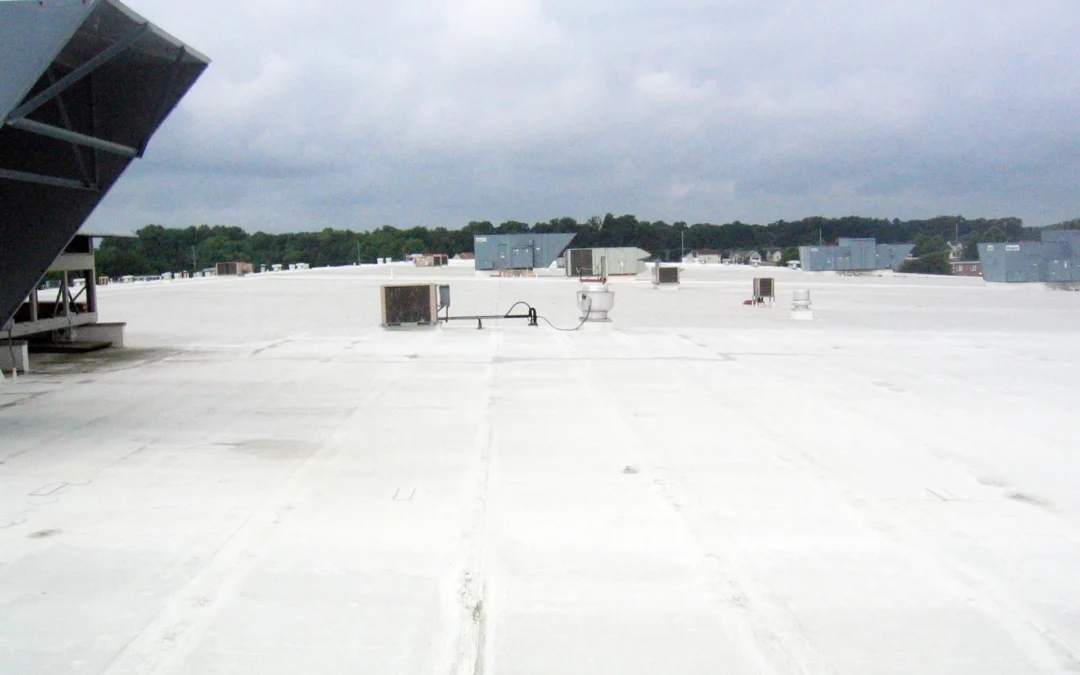
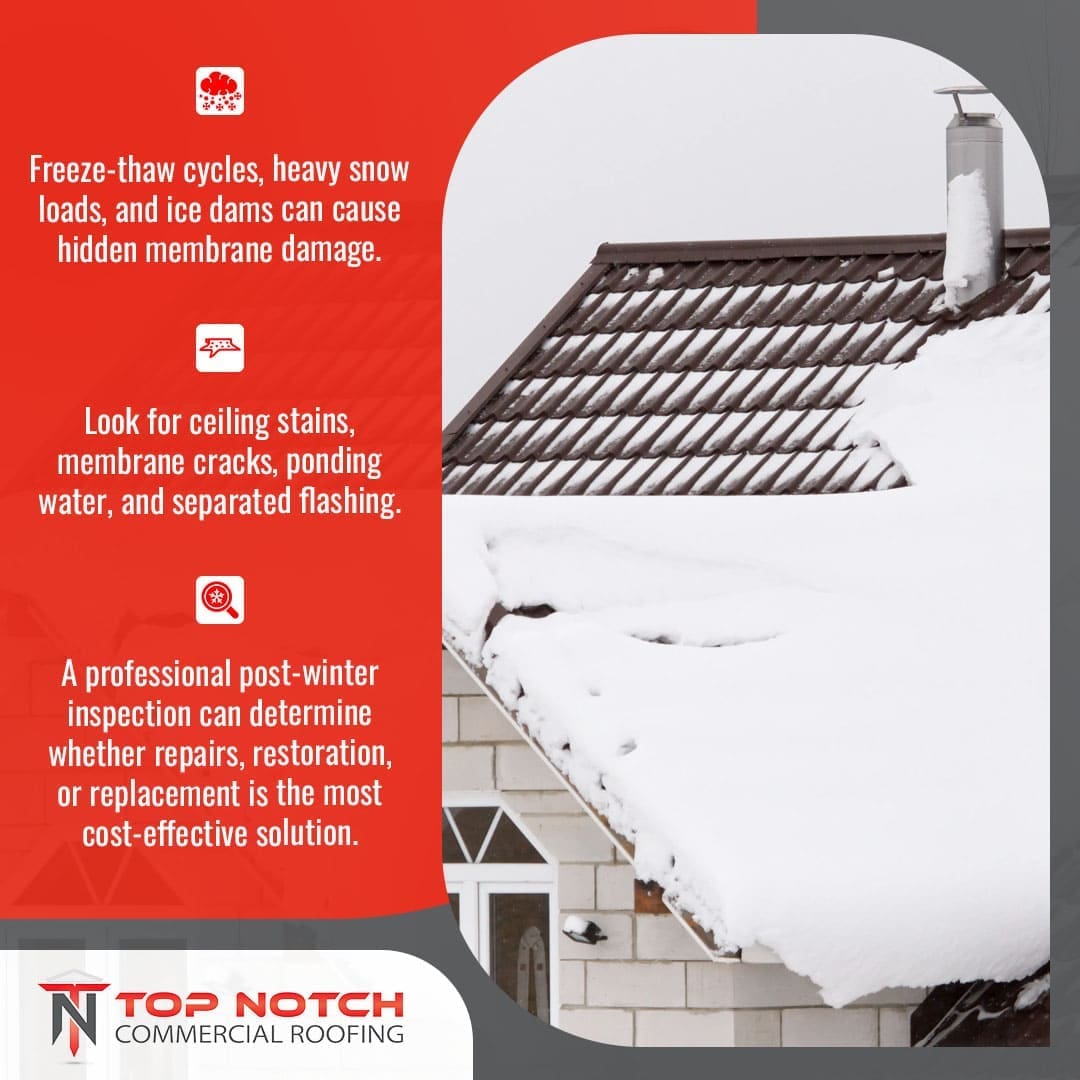
Ohio winters bring relentless freeze-thaw cycles, heavy snow loads, and temperature swings that test every commercial flat roof system. Property managers and building owners across Columbus wake up to water stains, membrane splits, and drainage failures once the snow melts. Understanding what winter does to your roof and knowing how to spot damage early determines whether you face a simple flat roof repair in Columbus, OH, or an expensive emergency replacement.
Top Notch Commercial Roofing serves property owners throughout Central Ohio who need reliable post-winter roof assessments. Our process identifies winter damage before small problems become building-wide water intrusion issues. This guide walks you through the specific ways Ohio winters damage flat roofs, the warning signs you should never ignore, and the inspection process that protects your investment.
How Winter Weather Damages Flat Roofs in Central Ohio
Freeze-Thaw Cycles Impact on Membrane Integrity
Columbus experiences an average of 42 freeze-thaw cycles each winter, according to Great Lakes Integrated Sciences and Assessments research. Water seeps into tiny membrane cracks, freezes overnight, expands, and forces those cracks wider. This repeats dozens of times from December through March. Single-ply membranes like TPO and EPDM handle this stress differently than built-up roofing systems, but all materials face degradation from constant expansion and contraction.
The rubber compounds in EPDM become brittle in sub-zero temperatures. TPO seams experience tension as the material contracts. Metal fasteners pull against membranes during these temperature changes. Each cycle weakens the roof’s waterproof barrier incrementally.
Snow Load Stress Patterns Specific to Columbus Climate
Central Ohio commercial buildings face design snow loads of 30 pounds per square foot ground snow load according to Ohio Building Code requirements. Actual snow accumulation often exceeds these calculations during heavy lake-effect events. Flat roofs don’t shed snow as sloped systems do. The weight accumulates, stressing structural decking, creating ponding depressions, and compressing insulation layers.
Drifting patterns compound the problem. Snow piles against parapets, HVAC units, and rooftop equipment. These concentrated loads create stress points where membranes stretch beyond their designed capacity. When temperatures rise and snow melts rapidly, the sudden water volume overwhelms drainage systems designed for gradual runoff. Properties experiencing membrane stress or structural deflection from snow loads should schedule flat roof repair in Columbus, OH, before spring storms compound the damage.
| Winter Stress Factor | Impact on Flat Roofs | Peak Risk Period |
| Freeze-Thaw Cycles | Membrane cracking, seam separation | January – March |
| Snow Load | Structural stress, ponding, insulation compression | December – February |
| Ice Dams | Edge flashing damage, gutter failures | January – February |
| Temperature Fluctuation | Fastener movement, material contraction | November – April |
Ice Dam Formation on Commercial Flat Roofs
Ice dams form when heat escaping through your roof melts snow. The water runs toward colder edges and refreezes, creating thick ice barriers. On flat commercial roofs, this happens along parapet walls, scuppers, and roof edges. The ice blocks normal drainage paths, forcing standing water to find other routes—usually through seams, fasteners, or deteriorated flashing.
Unlike residential pitched roofs, where ice dams are obvious, commercial flat roof ice formations hide beneath equipment, behind parapet walls, and in internal drainage areas. Property managers often don’t discover the damage until interior leaks appear weeks after the ice melts.
Temperature Fluctuation Effects on Seams and Fasteners
Ohio March temperatures swing 40-50 degrees between afternoon and overnight lows. Roofing membranes expand and contract with these changes. Seams welded or adhered during installation face continuous stress. Mechanical fasteners work loose as materials move around them. Sealants applied in summer become rigid in winter cold, then crack when temperatures rise.
Metal components—cap sheets, edge metal, and pipe boots—expand and contract at different rates than membrane materials. This differential movement creates gaps where water penetrates. The damage accumulates silently until spring rains expose every vulnerability winter created.
Warning Signs Your Flat Roof Sustained Winter Damage
Interior Ceiling Stains and Water Marks
Brown discoloration on ceiling tiles signals active or recent water penetration. Fresh stains indicate ongoing leaks requiring immediate attention. Dried watermarks from previous intrusion suggest intermittent problems that worsen during storms. Check areas below roof penetrations, parapet walls, and building corners where damage concentrates.
Water follows unexpected paths through roof assemblies. A flat roof leak appearing in your second-floor office might originate 30 feet away at a rooftop HVAC unit. Document every stain location before calling flat roofing specialists in Columbus, OH. This information helps inspectors trace water back to entry points.
Visible Membrane Cracks or Splits
Walk your roof perimeter after winter ends. Look for dark lines across white TPO membranes or irregular tears in EPDM surfaces. Cracks often run parallel to building edges or radiate from penetration points. Small splits widen quickly once water enters, so size doesn’t indicate severity.
Pay attention to areas where the snow piled highest. Stress cracks appear where the weight exceeds design limits. Check around rooftop units where foot traffic combined with freeze-thaw action creates multiple failure points.
Pooling Water That Won’t Drain
Standing water remaining 48 hours after rain signals drainage problems or structural sagging. Winter snow loads compress insulation and deck materials, creating depressions that didn’t exist before. Ponding accelerates membrane deterioration, provides mosquito breeding grounds, and adds continuous weight stress.
According to the Asphalt Roofing Manufacturers Association, ponding water creates multiple adverse effects, including membrane degradation, ice damage, and biological growth that can shorten roof system life. Document ponding locations with photos. Measure water depth in multiple spots to assess severity.
Flashing Separation Around Penetrations
Examine every roof penetration—pipes, vents, HVAC curbs, and skylights. Flashing separates when freeze-thaw cycles break sealant bonds or when snow loads shift equipment slightly. Even a 1/8-inch gap can allow hundreds of gallons of water entry during a typical spring storm.
Check inside corners where vertical flashing meets horizontal membranes. These transition points fail first because they experience the most movement. Separation here leads directly to interior water damage.
Blistering or Bubbling Surface Areas
Blisters indicate trapped moisture between membrane layers or between membrane and substrate. Winter moisture that penetrated through minor defects vaporizes when spring temperatures rise. The expanding vapor creates pressure bubbles. Small blisters may stay stable, but large ones will eventually rupture.
Don’t confuse blisters with normal membrane texture. True blisters feel spongy when pressed and show clear separation from underlying materials. These areas need professional evaluation to determine if localized repair or broader restoration makes sense.
Step-by-Step Post-Winter Flat Roof Inspection Process
Exterior Visual Assessment Checklist
Start at ground level. Walk the building perimeter looking for obvious damage: displaced edge metal, hanging downspouts, or separated fascia. Note any ice damage to gutters or parapet caps. Move to the roof using proper safety equipment.
Systematic inspection prevents missing problem areas:
- Divide the roof into sections
- Document conditions with dated photos
- Mark damaged areas with chalk or flags
- Record membrane type and approximate age
- Note any previous repair attempts
Drainage System Evaluation
Test every drain, scupper, and downspout. Pour water into each opening and verify it flows freely. Clear debris from strainers and drain bowls. Check for separation between drain bodies and roof membranes – a common failure point after freeze-thaw cycles.
Inspect internal drainage piping if accessible. Winter ice can crack drain lines inside the building. Water backing up from damaged internal piping mimics roof leaks but requires completely different repairs.
Membrane Condition Documentation
Top Notch Commercial Roofing uses detailed documentation protocols during post-winter assessments. We photograph every concern, measure defect dimensions, and create condition reports that property owners can share with insurance carriers or budget committees.
Record these specifics:
- Crack length and width measurements
- Blister locations and approximate sizes
- Seam condition along 10-foot sections
- Flashing attachment integrity
- Overall membrane appearance and cleanliness
Penetration and Edge Detail Examination
Roof penetrations fail more frequently than field membranes. Check pitch pans, pipe boots, equipment curbs, and vent flashings. Look for pulled fasteners, separated sealant joints, and material deterioration.
Edge details need equal attention. Parapet wall caps loosen when ice forms behind them. Gravel stops separate when temperature changes cause differential movement. Fascia metal detaches when ice dams pull it away from the roof edges.
When Professional Inspection Becomes Necessary
Property managers should schedule professional inspections when:
- Interior leaks appear, but the source isn’t obvious
- Visible damage exceeds simple patch repairs
- Roof age approaches manufacturer warranty limits
- Building sale or refinancing requires documentation
- Insurance claims need a professional damage assessment
We provide detailed inspection reports that identify every defect, prioritize repairs by urgency, and estimate costs for budgeting purposes. Searching for qualified “flat roof specialists near me” should prioritize contractors with documented experience in post-winter damage assessment and restoration systems.
Common Post-Winter Flat Roof Leak Sources
Parapet Wall Flashing Failures
Parapet walls create difficult waterproofing transitions. Membrane must run up the wall face, over the cap, and down the exterior. Counter-flashing protects this vulnerable area. Winter ice forming behind flashings pries them away from walls. Sealants crack in cold temperatures. Fasteners corrode and loosen.
Walk inside parapet perimeters, checking for flashing movement. Press against vertical membrane sections, feeling for separation. Look for sealant gaps wider than 1/16 inch. These failures allow water to run down inside wall cavities, appearing as interior leaks far from the actual entry point.
HVAC Unit Curb Deterioration
Rooftop HVAC equipment sits on raised curbs to keep units above standing water. Curbs connect to roof membranes through complex flashing details. Vibration from equipment operation loosens fasteners. Temperature cycling breaks sealant bonds. Condensation from units saturates wood curbs, promoting rot.
Check for gaps between curb bases and roofing membranes. Look for deteriorated wood showing through metal flashing. Test for movement when you push against the curb sides. Equipment penetrations create common entry points for winter moisture infiltration.
Skylight and Roof Hatch Vulnerabilities
Skylights and hatches penetrate roof membranes with large openings. Curb flashings must handle thermal movement, structural loads, and continuous weather exposure. Ice dams form around these elevated structures. Snow loads stress mounting frames. Condensation rots wooden curbs from the inside.
Open hatches and skylights from below. Check for water stains on interior curb surfaces. Examine gaskets for compression set or cracking. Look for fastener corrosion indicating long-term moisture exposure.
Expansion Joint Separation
Large commercial roofs include expansion joints that allow building sections to move independently. These joints contain flexible materials bridging gaps between roof sections. Winter temperature extremes cause maximum building movement. Expansion joint materials tear, adhesives fail, and water enters gaps.
Test expansion joints by walking directly on them. Excessive movement or visible separation indicates failure. Water penetrating expansion joints runs directly into the building structure, often traveling laterally before appearing as interior leaks.
Fastener Back-Out and Membrane Shrinkage
Mechanically attached roofing systems use thousands of fasteners securing membranes to the deck. Temperature cycling, wind uplift, and material shrinkage work fasteners loose over time. Winter accelerates this process. Shrinking membranes pull against fasteners with increased force. Deck materials, contracting, and expanding work screws loose.
Back-out fasteners create small tents in membrane surfaces where wind gets underneath and tears the material. Water enters through fastener penetrations once seal washers separate. Check mechanically attached roofs for raised areas indicating loose fasteners beneath. Experienced flat roofing specialists can determine whether fastener replacement or complete membrane re-attachment provides the better long-term solution.
Repair vs. Restoration: Making the Right Choice for Your Building
Cost Comparison of Repair Options
Simple repairs addressing isolated damage cost $500-$2,000 per incident. Multiple or larger repair areas push costs to $5,000-$15,000. Complete roof replacement runs $8-$15 per square foot for commercial flat roofs, meaning a 10,000-square-foot roof costs $80,000-$150,000.
Restoration through coating systems costs $3-$6 per square foot. That same 10,000-square-foot roof receives complete waterproofing restoration for $30,000-$60,000 – 40-60% less than replacement while extending roof life by 10-20 years, or more.
| Option | Cost Range | Lifespan Extension | Best For |
| Spot Repairs | $500 – $15,000 | 2-3 years | Recent damage, newer roofs |
| Coating Restoration | $3 – $6/sq ft | 10-20 years | Roofs with 50%+ remaining life |
| Complete Replacement | $8 – $15/sq ft | 20-30 years | Failed systems, extensive damage |
Lifespan Extension Through Coating Systems
Silicone and acrylic roof coatings provide seamless waterproof barriers over existing membranes. Coatings seal small cracks, reinforce aging materials, and reflect solar heat to reduce energy costs. Properly applied coating systems extend roof life comparable to partial replacement at a fraction of the cost.
Top Notch Commercial Roofing evaluates coating suitability during post-winter inspections. Roofs with sound substrates, minimal ponding, and intact fastening qualify for restoration. Severely deteriorated roofs or those with structural issues require replacement.
When Complete Replacement Makes Financial Sense
Replace roofs when:
- Existing system exceeds manufacturer lifespan by 5+ years
- Interior water damage repair costs exceed 30% of the replacement cost
- Structural deck shows rot, rust, or deflection
- Building renovation requires roof system upgrades
- Energy efficiency improvements justify investment
Replacement allows updating to modern materials with better warranties, improved insulation values, and lower maintenance requirements. Long-term building ownership often justifies replacement over repeated temporary repairs.
Insurance Considerations for Winter Storm Damage
Commercial property insurance covers sudden storm damage but typically excludes gradual deterioration or maintenance failures. Winter ice dam damage may qualify for coverage if ice accumulation exceeded normal expectations. Wind damage during winter storms generally receives coverage.
Document everything before filing claims. Insurance adjusters need proof connecting damage to specific weather events. Professional inspection reports from a reliable flat roof repair company, like Top Notch Commercial Roofing, provide the detailed documentation insurers require for claim approval.
Selecting the Right Flat Roofing Specialists for Post-Winter Work
Certifications and Experience Verification
Qualified contractors maintain manufacturer certifications for systems they install. Ask for current certification documents. Check insurance coverage meets commercial project requirements—minimum $1 million general liability.
Experience matters with commercial flat roofs. Residential roofers lack training for complex commercial systems. Verify contractor experience with your specific roof type. Request references from similar buildings in Central Ohio.
Response Time Expectations for Spring Scheduling
Spring creates peak demand for commercial roof services. Every property manager who deferred winter repairs calls contractors when the weather improves. Expect 2-4 week scheduling delays from March through May.
Emergency repairs should receive a same-day or next-day response regardless of the season. Establish relationships with contractors before emergencies occur. Companies familiar with your building respond faster because they already understand your roof system.
Warranty Coverage on Repair Work
Reputable flat roofing specialists warranty repair work for a minimum of 2-5 years. Material warranties come from manufacturers. Labor warranties come from installing contractors. Both matter.
Understand warranty exclusions. Most don’t cover damage from building movement, poor maintenance, or subsequent alterations by other contractors. Get warranty terms in writing before work begins. File warranty documents with building records where future property managers can find them.
Documentation and Reporting Standards
Professional contractors provide detailed documentation, including:
- Pre-work condition photos
- Scope of work descriptions
- Material specifications and data sheets
- Installation progress photos
- Final completion photos
- Testing and quality control records
This documentation proves work was completed correctly, supports warranty claims if problems develop, and helps future contractors understand roof history. A professional flat roof repair company maintains detailed project files for every job, providing you with complete records for building maintenance archives. Insist on comprehensive documentation before making the final payment.
Schedule Your Post-Winter Roof Assessment in Columbus and Surrounding Areas
Don’t wait until interior leaks damage ceiling tiles, disrupt operations, or threaten inventory. Post-winter roof assessments identify problems while they’re still manageable and repair costs remain reasonable. The longer you delay, the more expensive fixes become.
Top Notch Commercial Roofing provides thorough post-winter roof inspections for commercial properties throughout Columbus, Zanesville, Cambridge, Athens, and Central Ohio. We document every concern, explain your options clearly, and provide accurate estimates for budgeting purposes. Our team understands Ohio weather challenges and knows how to restore roofs damaged by harsh winters.
Call (740) 409-1171 today to schedule your post-winter flat roof assessment. We’ll identify winter damage, prioritize repairs by urgency, and help you protect your property investment. Our straightforward approach means you get honest answers about whether your roof needs simple repairs, coating restoration, or complete replacement. Let’s get your roof ready for spring storms before small problems become big headaches.