Spring in Central Ohio marks the turning point for commercial property managers and building owners ready to address roofing concerns that surfaced during harsh winter months. Between March and May, conditions align perfectly for commercial roof coating in Columbus, OH, delivering a restoration window that combines optimal temperatures, contractor availability, and long-term performance benefits. Top Notch Commercial Roofing works with facility managers across the region who recognize this seasonal opportunity to protect their buildings before summer heat arrives and demand spikes.
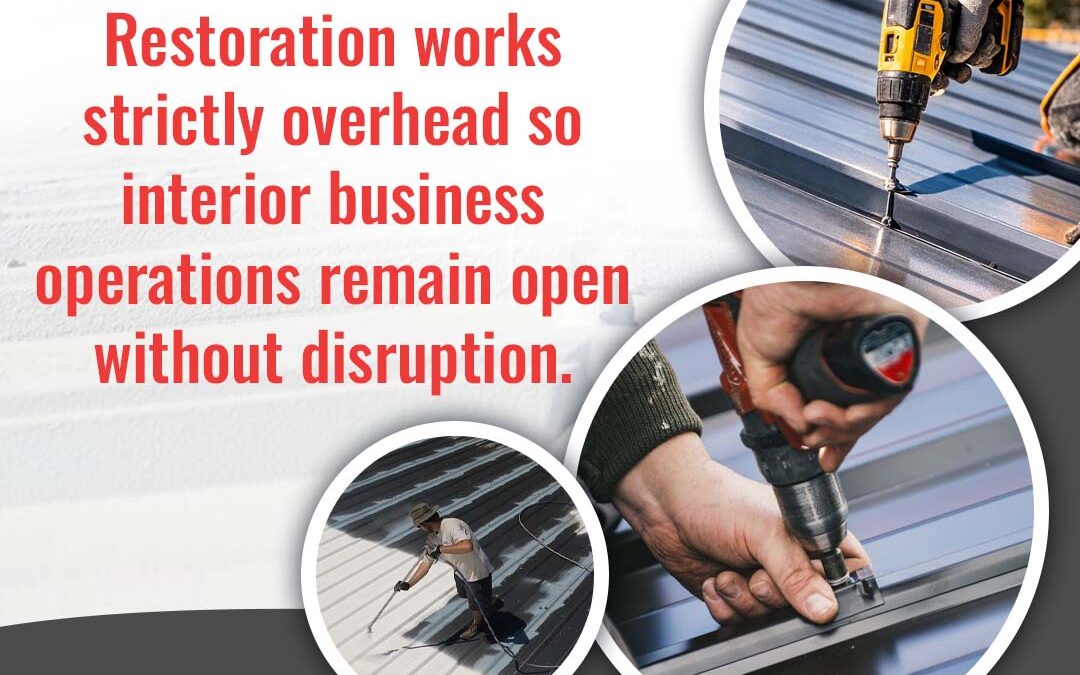
Unlike full tear-off replacements that disrupt operations and drain capital budgets, coating systems applied during spring restore aging flat and low-slope roofs at a fraction of the cost. The science behind successful application depends heavily on environmental factors, and Columbus’s weather patterns from mid-March through May create ideal conditions that simply don’t exist during summer’s extreme heat or winter’s freezing temperatures.
Why Temperature and Humidity Matter for Flat Roof Coating in Columbus, Ohio
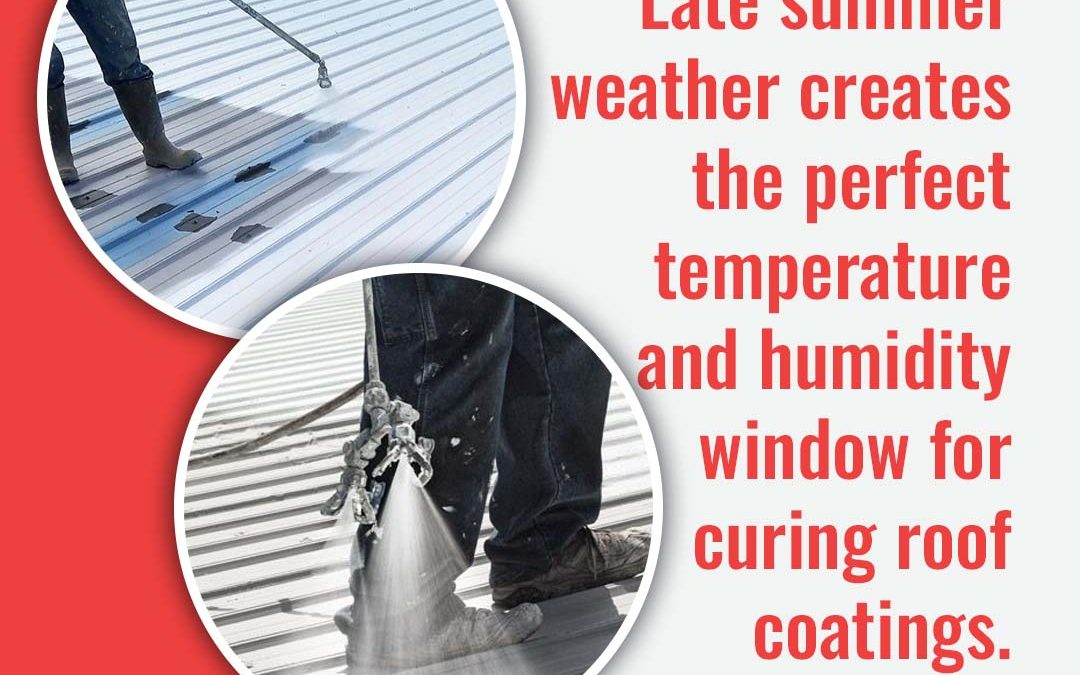
Coating manufacturers specify application requirements for good reason. Adhesion, curing, and long-term performance all depend on getting the basics right. Most flat roof coating in Columbus, Ohio systems require substrate temperatures between 50°F and 90°F during application and the critical 24-48 hour cure window.
According to National Weather Service climate data for Columbus, the city experiences average high temperatures of 51°F in March, progressing through the 50s and 60s in April, and reaching the upper 60s to mid-70s by May. These temperatures land squarely within the recommended range.
Spring Humidity Supports Proper Curing
Spring months in Central Ohio typically maintain relative humidity levels between 60 and 70%, which supports proper coating cure without excessive moisture interference. Summer months bring afternoon thunderstorms that create humidity spikes above 80%, potentially compromising adhesion if application timing isn’t precise.
| Month | Avg. High Temp | Avg. Low Temp | Ideal Application Window |
| March | 51°F | 32°F | Mid-to-late month |
| April | 64°F | 42°F | Most days suitable |
| May | 74°F | 52°F | Excellent conditions |
| June | 83°F | 61°F | Growing heat challenges |
| July | 86°F | 65°F | Afternoon heat stress |
How Temperature Extremes Affect Coating Performance
Spring’s moderate temperatures prevent common application problems:
- Summer heat stress: When substrate temperatures exceed 90°F (common on Columbus roofs during July and August), coatings cure too quickly, leading to pinholing, blistering, or inadequate adhesion
- Winter application failures: Applications below 40°F cause materials to become too viscous to spread properly, and curing reactions slow or stop entirely
- Extended daylight hours: Longer working days (sunrise around 7 AM, sunset around 8 PM by late April) allow crews to complete substrate preparation, primer application, and coating layers without rushing, reducing labor costs and improving quality control
Budget Planning: How Spring Scheduling Reduces Commercial Roof Restoration Costs
Property managers juggling multiple building systems understand the value of strategic timing. Commercial roof restoration in Columbus, OH, scheduled during the spring, delivers measurable cost advantages compared to reactive summer projects or emergency winter repairs.
Contractor availability directly impacts pricing. Spring represents the shoulder season for commercial roofing. Demand hasn’t reached the June-through-September peak when every facility wants work completed. This creates competitive pricing pressure and gives building owners negotiating leverage.
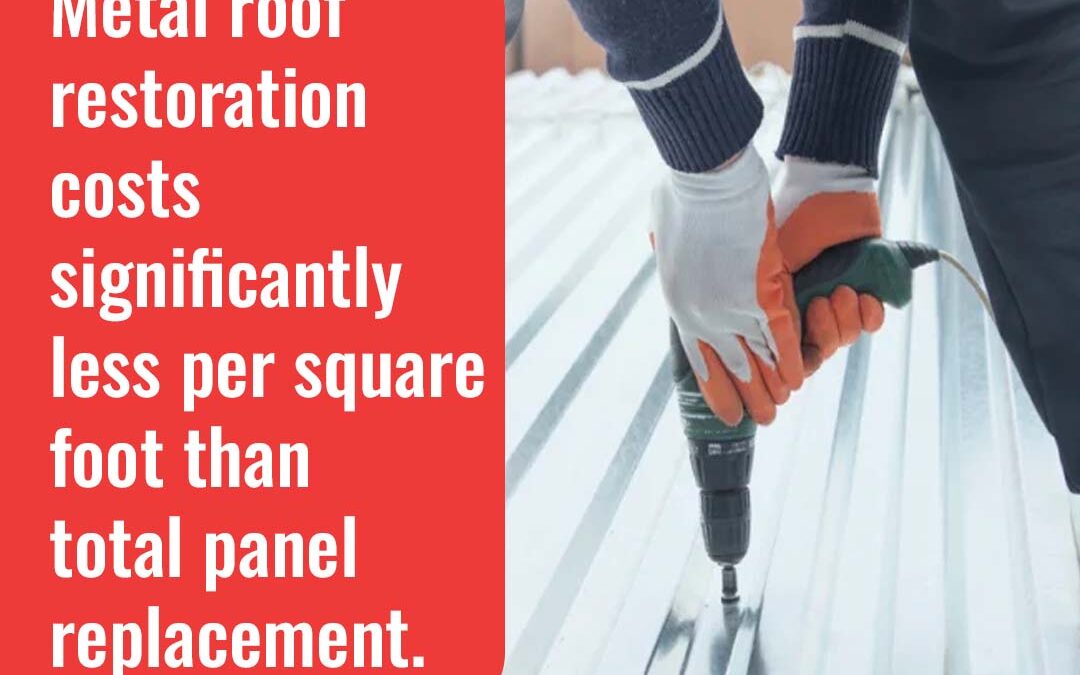
Restoration coating systems typically cost $2.80-$4.00 per square foot for a warrantied system on commercial buildings over 10,000 square feet, while complete tear-off and replacement runs $5.50-$12.00 per square foot for single-ply membranes. For a typical 20,000-square-foot Columbus warehouse:
- Coating restoration: $56,000-$80,000
- Full replacement: $110,000-$240,000
The $30,000-$160,000 difference explains why facility managers investigate options for commercial roof restoration in Columbus, OH, before committing to replacement. Spring scheduling allows proper evaluation time for substrate moisture testing, infrared scans, and detailed assessments without the pressure of an active leak forcing rushed decisions.
Material Performance: What Makes Spring Optimal for Low-Slope Roof Coating
Different coating chemistries respond to environmental conditions in specific ways. Understanding how silicone, acrylic, and polyurethane systems perform helps property managers select the right flat roof coating in Columbus, Ohio, when working with a roof coating contractor.
Silicone Coatings: The Moisture-Resistant Leader
Silicone coatings dominate the commercial market for flat roofs due to superior moisture resistance and UV stability. These single-component systems require substrate temperatures above 45°F and cure through moisture reaction with atmospheric humidity.
Columbus spring weather provides the ideal 60-70% humidity range, which:
- Creates enough moisture to support curing without excessive wetness that could compromise adhesion
- Prevents the rapid solvent evaporation that occurs during summer
- Allows proper film formation and eliminates surface defects
Acrylic Coatings: Reflective Performance with Precise Timing
Acrylic coatings offer excellent reflectivity but require more careful application timing. These water-based systems need minimum substrate temperatures of 50°F and at least 4-6 hours of drying time before potential rain exposure.
Spring advantages for acrylic applications:
- Predictable weather patterns typically feature 2-3-day dry spells between frontal systems
- Reliable application windows reduce weather-related risks
- Summer’s afternoon thunderstorm pattern makes acrylics riskier, as unexpected showers can wash away uncured material
Substrate Preparation: Spring’s Often-Overlooked Benefits
Substrate preparation benefits from spring conditions in ways often overlooked. Power washing to remove dirt, algae, and loose material works more effectively in moderate temperatures. Primers achieve better adhesion when applied to substrates between 50 and 80°F.
Spring’s longer daylight hours allow the following:
- Complete prep work, primer application, and initial coating layer in a single day
- Reduced risk of overnight contamination or weather changes between critical steps
UV Curing Performance
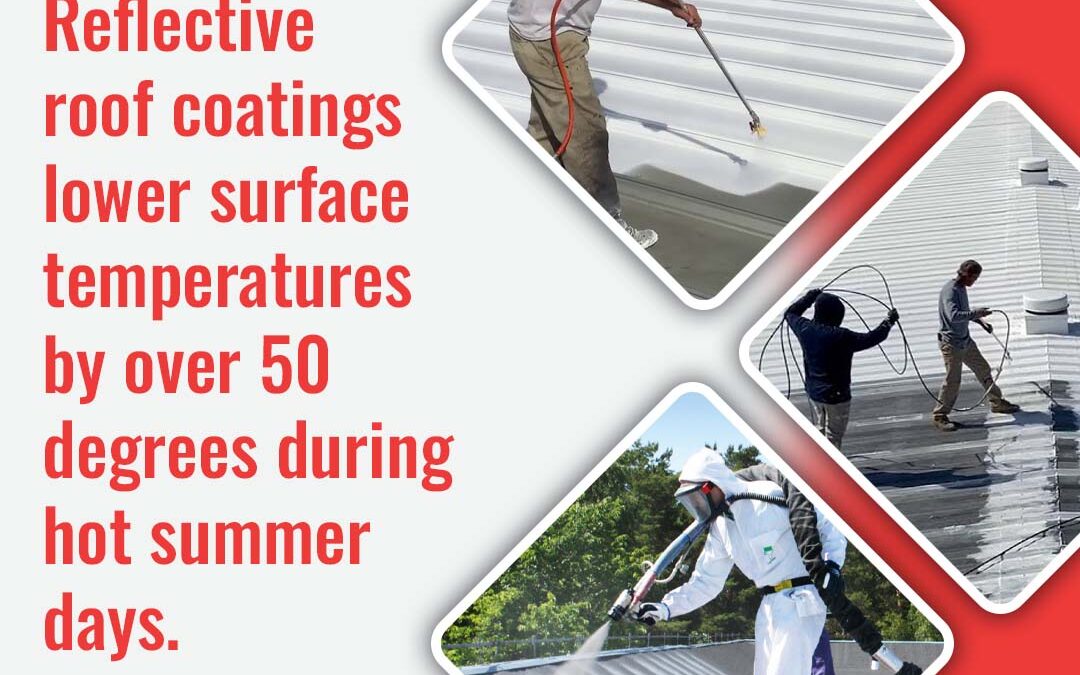
According to the Department of Energy information on cool roofs, reflective coatings can lower roof surface temperatures by approximately 50°F on hot days. UV exposure during the spring months supports coating cure without excessive heat stress. As sunlight strengthens from March through May, coating cross-linking accelerates, but substrate temperatures remain moderate. This creates the best-case scenario: active curing promoted by UV radiation without the thermal stress that can cause bubbling or delamination during peak summer heat.
Coating Requirements by Roof Type
Technical specifications for different roof types matter when selecting coating systems:
- TPO Membrane Roofs
- Require specialized primers for silicone adhesion
- Spring temperatures support proper primer curing before coating application
- EPDM Rubber Roofs
- Benefit from acrylic or silicone topcoats
- Moderate spring temps prevent primer ponding or over-thinning
- Modified Bitumen Systems
- Accept multiple coating options
- Spring application prevents substrate softening that occurs in summer heat
- Built-Up Roofs
- May require additional substrate repair
- Spring weather allows proper patching time before coating
Scheduling Advantages: Why Property Managers Book Roof Coating Contractors in Early Spring
Facility managers running multi-site portfolios understand that timing determines project success as much as contractor selection. The weeks between mid-March and late May offer scheduling benefits that disappear once peak season arrives.
Contractor capacity becomes the limiting factor by June. Quality commercial roofing companies maintain specific crew sizes and can only handle a finite number of simultaneous projects. Top Notch Commercial Roofing typically sees inquiry volume double between May and June as property managers react to spring assessment findings and budget approvals.
Early spring booking delivers the following:
- Preferred start dates with dedicated crew attention
- 2-5 day project timelines for buildings under 30,000 square feet
- Reduced weather delays compared to summer thunderstorms and fall frontal systems
- Competitive pricing before peak season demand
Spring provides the lead time needed for proper planning without the urgency of crisis management. Retail centers avoid peak holiday preparation periods. Manufacturers coordinate with scheduled production shutdowns. Office buildings align projects with fiscal year-ends. Multi-tenant properties manage diverse tenant schedules.
Early booking also allows proper material procurement. Some specialty coating systems or custom colors require 2-4 week lead times from manufacturers. Spring scheduling accommodates these timelines comfortably, while summer rush projects sometimes force material substitutions or delays.
Tenant coordination represents another spring advantage. Commercial tenants appreciate advance notice for any work affecting roof penetrations, HVAC access, or potential noise. The communication and planning required for complex tenant spaces happen more smoothly when not compressed by emergency timelines or contractor availability constraints.
Long-Term Protection: How Spring Application Extends Your Coating’s Service Life
Proper installation sets the foundation for coating performance over the next 10-20 years. Spring application conditions create the ideal starting point for maximizing return on investment and minimizing future maintenance costs.
Superior Adhesion and Durability
Low-slope roof coating systems properly installed during optimal spring conditions demonstrate superior long-term adhesion compared to those applied under stress conditions. When substrate bonding occurs at recommended temperatures with proper cure time, the coating-to-membrane interface achieves maximum strength. This prevents edge lifting, bubble formation, and premature failure modes that plague hastily applied summer coatings.
Immediate and Compounding Energy Savings
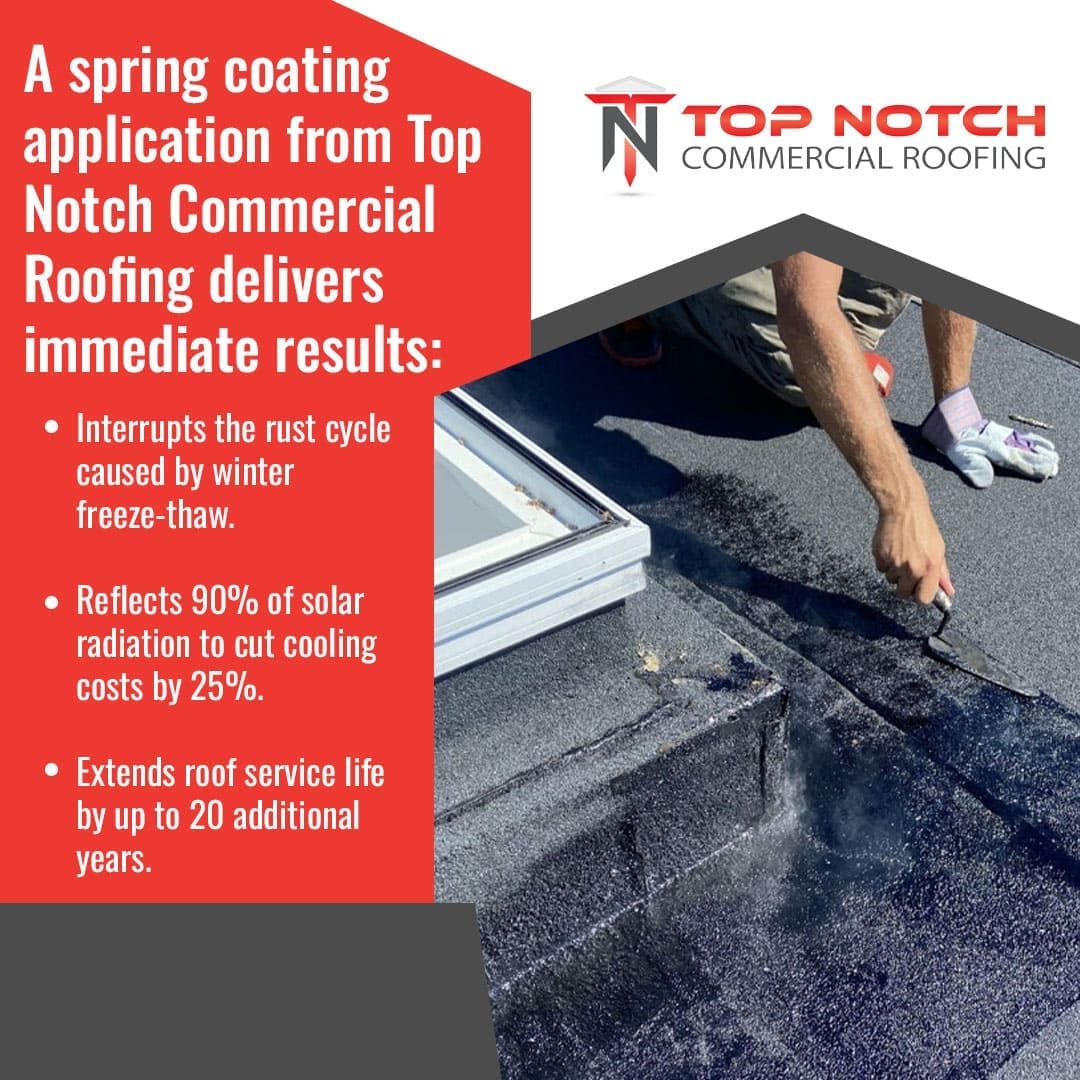
Energy efficiency gains materialize immediately but compound over time. Reflective white coatings typically achieve solar reflectance values of 0.85-0.90, meaning they reflect 85-90% of incoming solar radiation. According to Energy Star program information, a clean white roof that reflects 80% of sunlight will stay about 50°F cooler than a grey roof that reflects only 20% of sunlight on a typical summer afternoon.
For a 25,000-square-foot warehouse in Columbus operating with standard commercial electricity costs, the cooling load reduction translates to substantial annual savings. Over a 15-year coating service life, these savings more than cover the initial coating investment while eliminating the need for premature roof replacement.
Heat Stress Preparation
Spring application prepares roofs for the summer heat stress that causes most coating system failures. Coatings applied in spring have 2-3 months to fully cure and achieve maximum cross-link density before facing 90°F+ ambient temperatures, 150°F+ substrate temperatures, and daily thermal cycling stress. This extended cure period builds resilience into the coating matrix that summer applications cannot match.
Warranty Protection and Maintenance
Warranty activation depends on following manufacturer specifications precisely. Most coating manufacturers require third-party inspections verifying proper substrate preparation, correct application rates, and approved environmental conditions during installation. Spring’s predictable weather makes meeting these requirements straightforward, protecting your warranty investment.
Maintenance requirements following coating installation remain minimal but important. We recommend annual inspections addressing debris removal from drains and scuppers, cleaning of the reflective coating surface to maintain energy efficiency, inspection of penetrations and transitions, and documentation of roof condition for warranty compliance. Property managers working with us find that roofs coated during optimal spring conditions require fewer touch-up visits during the warranty period compared to those installed under marginal conditions.
Building Types That Benefit Most from Spring Commercial Roof Coating
While any commercial flat or low-slope roof can benefit from restoration coating, specific building types see particularly strong returns when addressed during the spring application window.
Warehouses and Distribution Centers
Columbus-area distribution facilities ranging from 50,000 to 200,000 square feet represent ideal coating candidates with large, uninterrupted roof surfaces and minimal penetrations. Spring coating application delivers strategic benefits:
- Temperature-controlled warehouses see immediate energy savings from reflective coatings
- Unheated facilities benefit from extended roof life without operational disruptions
- Extensive roof area and high cooling loads during summer operations maximize ROI
- Catastrophic business impact of roof leaks makes proactive spring restoration a smart investment
Retail Shopping Centers
Spring timing solves unique coordination challenges. Completion occurs before peak holiday preparation periods and after winter clearance cycles. Energy efficiency gains from reflective coatings reduce common area electricity costs, potentially decreasing CAM charges for tenants. Shopping centers with anchor tenants operating refrigeration systems see amplified savings as roof coating reduces heat transfer, affecting HVAC and refrigeration efficiency.
Manufacturing Facilities
Spring provides advance planning time to coordinate coating applications with production schedules. Manufacturing buildings operating heavy equipment generate substantial internal heat loads, and reflective roof coatings help exhaust heat without additional cooling system investment. Central Ohio manufacturers in Cambridge, Zanesville, and Newark choose spring restoration windows to align with fiscal year capital budgets.
Office Buildings and Medical Complexes
Professional environments demand uninterrupted operations and minimal occupant disruption. Spring coating projects completed during extended daylight hours reduce rooftop activity impact on building occupants. Medical facilities particularly value the infection control benefits of scheduled maintenance over emergency repairs, while improved HVAC efficiency from cool roof coatings contributes to better indoor air quality management and reduced operational costs.
Multi-Tenant Commercial Properties
Mixed-use developments and multi-tenant office parks benefit from spring coating application timing that accommodates diverse tenant schedules. Property managers coordinate access requirements, communicate schedules clearly, and demonstrate proactive asset management to ownership groups. Long-term cost savings strengthen property NOI (Net Operating Income) and enhance asset value during refinancing or sale processes.
Columbus’s industrial corridor along I-70, the commercial developments throughout Delaware and Fairfield counties, and the growing Athens and Zanesville commercial markets all present strong opportunities for strategic spring coating applications. Top Notch Commercial Roofing serves property managers across these Central Ohio markets who recognize that protecting their buildings starts with timing the work correctly.
Schedule Your Spring Roof Coating Assessment
The weather window for optimal coating application opens soon and closes quickly once peak season demand arrives. Property managers ready to protect their investment, reduce long-term costs, and extend roof service life by 10-20 years should schedule assessments now while contractor availability remains strong.
Top Notch Commercial Roofing brings specialized expertise in commercial roof coating in Columbus, OH, to properties throughout Zanesville, Cambridge, Athens, and nearby Central Ohio areas. Our focus on roof restoration over replacement delivers cost-effective solutions without compromising quality or long-term performance.
Take advantage of spring’s optimal application conditions and off-peak pricing. Call (740) 409-1171 to schedule your free roof assessment, or contact us online to discuss your specific building requirements. Our team will evaluate your roof’s condition, recommend appropriate coating systems, and provide detailed proposals for protecting your commercial property.
Don’t wait until summer heat stress reveals a coating application missed this spring. The right timing makes all the difference between a restoration that performs for decades and one that requires premature maintenance.