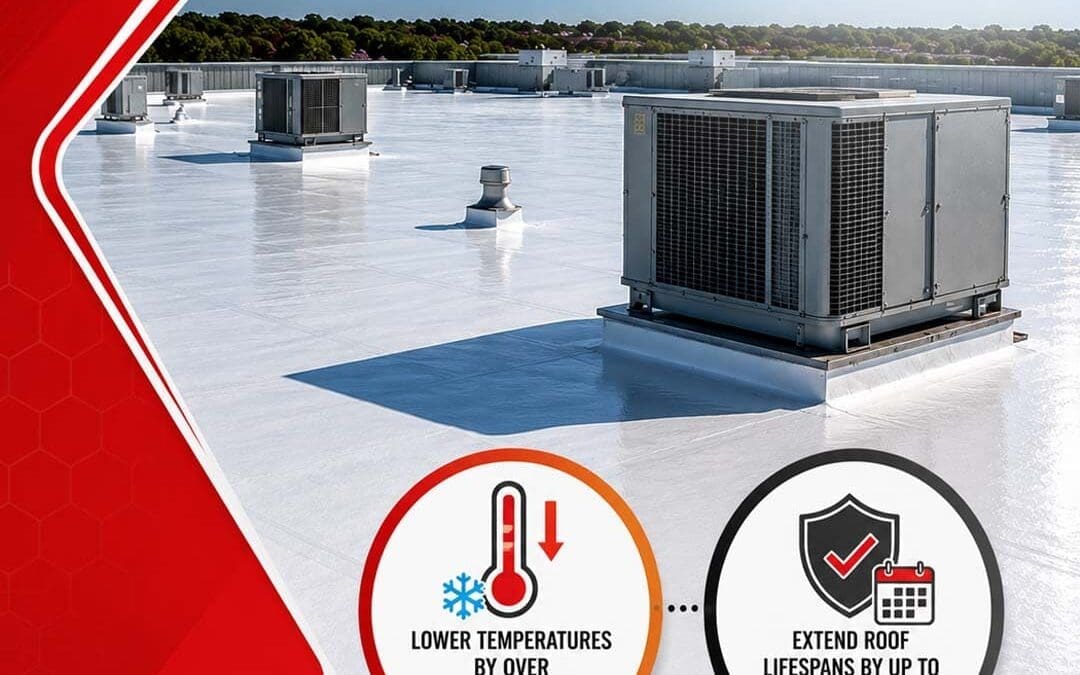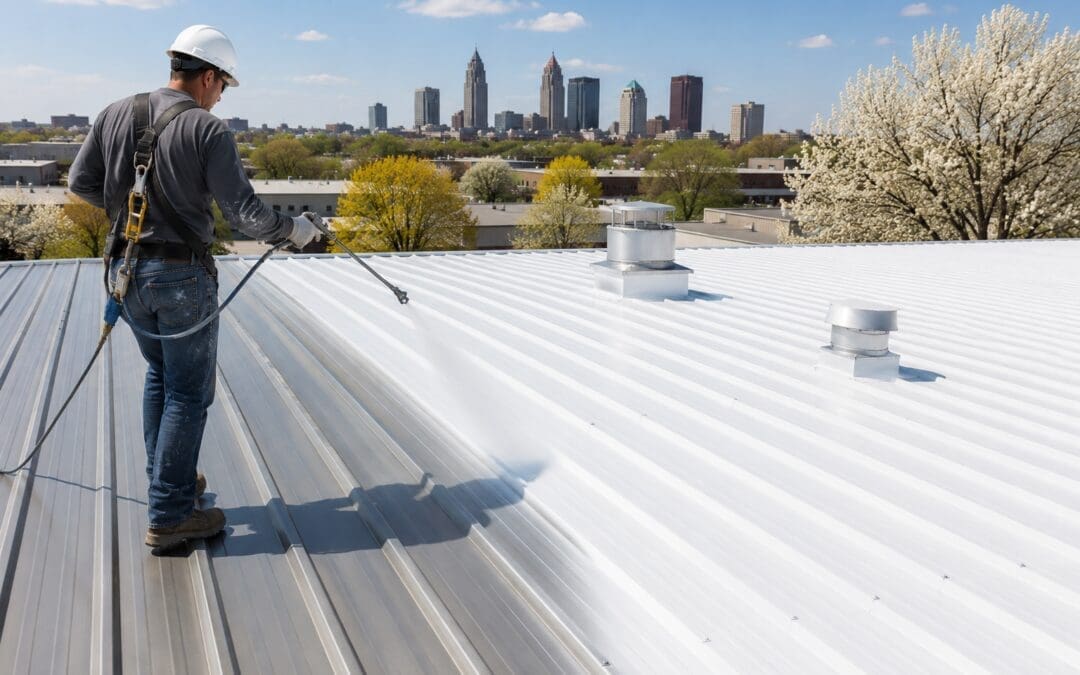
A commercial flat roof coating in Columbus, OH, can lower your roof surface temperature by up to 50°F on peak summer days. Depending on the building and insulation, reflective roof coatings may also reduce cooling demand, helping lower energy costs, according to the U.S. EPA and Department of Energy. For flat-roofed commercial buildings across Central Ohio, a Conklin-certified coating system from Top Notch Commercial Roofing is one of the most direct ways to cut what you spend on air conditioning each summer.
Key Takeaways
- Dark flat roofs in Columbus can reach 150°F+ on peak summer days; reflective coatings hold surface temps much closer to ambient air temperature
- DOE data: reflective elastomeric coatings reduce commercial AC energy use substantially
- Cool roofing products reflect 60 to 90% of incoming sunlight vs. 5 to 25% for conventional dark membranes
- Coating cost typically runs $2.80 to $4.00/sq ft vs. $5.50 to $12.00/sq ft for full replacement
- Conklin-certified systems qualify under the Energy Star program
Why Does a Dark Flat Roof Cost You More to Cool Each Summer?
Think of your dark flat roof like a black car sitting in a parking lot on a 90°F day. You already know what happens when you open that door.
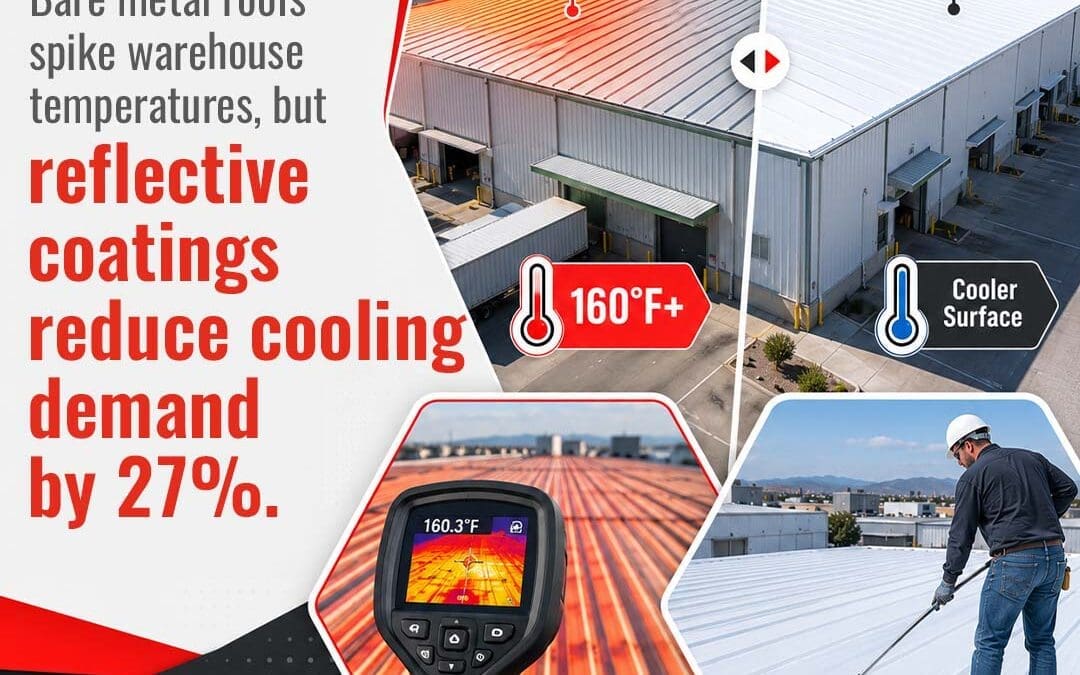
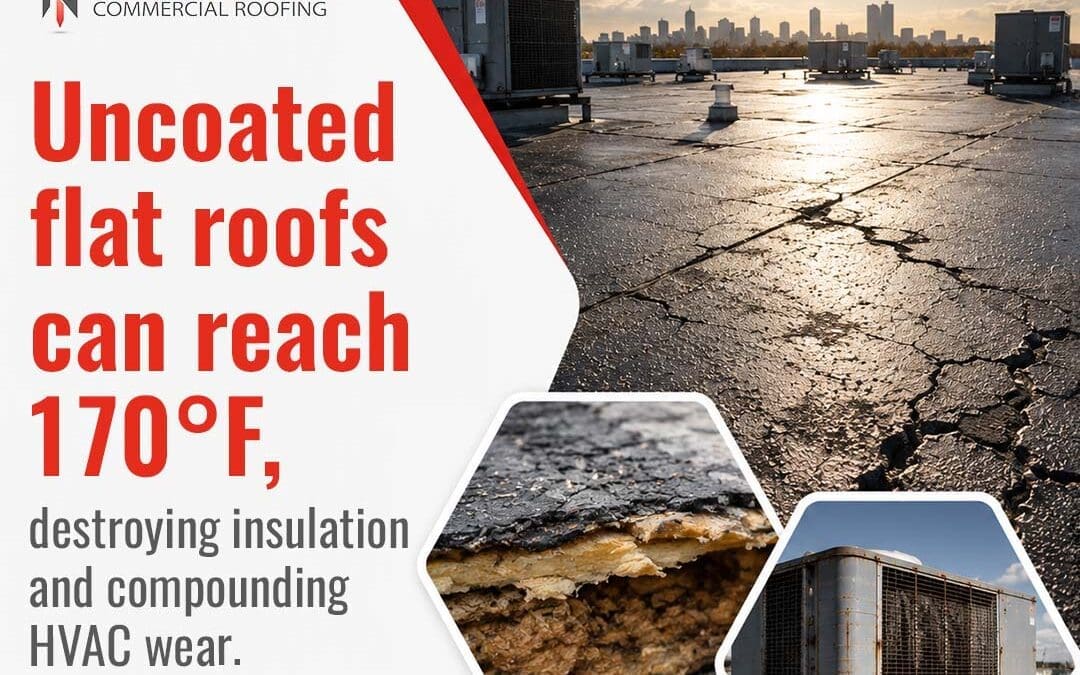
Standard dark roofing membranes (EPDM, modified bitumen, BUR) reflect only 5 to 20% of incoming sunlight, meaning 80% or more of that solar energy gets absorbed as heat. That heat transfers through the roof deck and into your building, forcing your HVAC system to run harder and longer. A reflective roof coating in Columbus, Ohio, flips that equation for buildings. White elastomeric or silicone coatings bounce the majority of solar energy back before it reaches the structure.
| Roof Surface Type | Solar Reflectance | Approx. Surface Temp on a 90°F Day |
| Standard dark EPDM membrane | 5–15% | 150–170°F |
| Aged asphalt BUR | 10–20% | 140–160°F |
| White reflective coating (new) | 80–90% | 100–115°F |
| White reflective coating (aged 3 yr) | 65–80% | 110–125°F |
Sources: U.S. DOE Cool Roof Guidelines (LBNL), U.S. EPA Cool Roofs
Disclaimer: Values are estimates for comparison purposes. Actual roof temperatures and reflectance may vary based on environmental conditions and roof characteristics.
That 40 to 60°F difference in surface temperature directly impacts how much electricity your cooling system draws every billing cycle. For building owners tracking Columbus commercial roof coating energy savings, that temperature gap is where the numbers start to make sense.
How Much Does a Cool Roof Coating Save in Columbus, OH?
The Environmental and Energy Study Institute (EESI) reports that a cool roof can reduce air conditioning energy use by up to 15% in single-story buildings, making cool roof coating in Columbus a practical option for improving energy efficiency during the warmer months.
Columbus sits in IECC Climate Zone 5, where summers generate real cooling costs, but winters are cold enough that some building owners ask about a heating penalty. The data show that in mixed climate zones like Central Ohio, summer cooling savings typically outweigh the small winter trade-off, especially for buildings with adequate insulation (R-20 or higher).
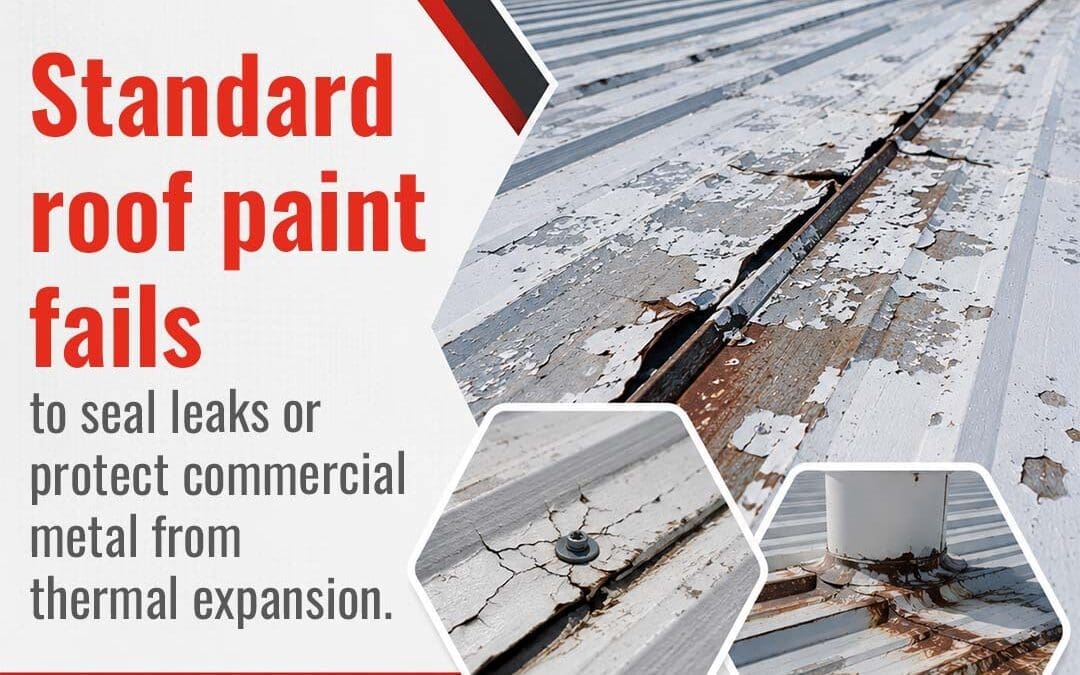
Top Notch Commercial Roofing applies Conklin-certified coating systems that carry Energy Star partner credentials. These are not paint. They are engineered elastomeric membranes designed to reflect solar radiation and release absorbed heat back into the atmosphere. That is where real commercial roof coating energy savings in Columbus come from: less heat entering the building means your HVAC runs fewer cycles per day.
What Flat Roof Types Are Good Candidates for Reflective Coating?
Not every roof qualifies for an energy-efficient roof coating. A coating performs best when the existing membrane or substrate is structurally sound but aging or underperforming thermally.
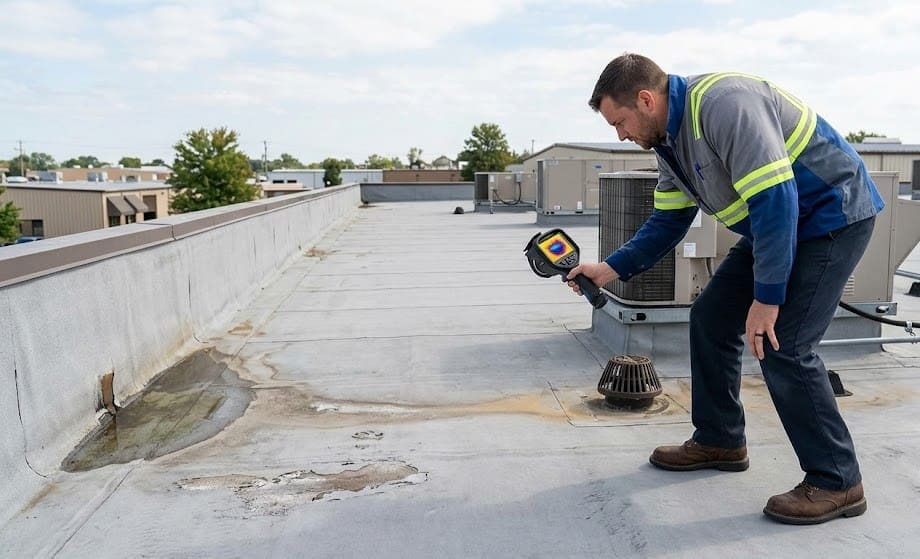
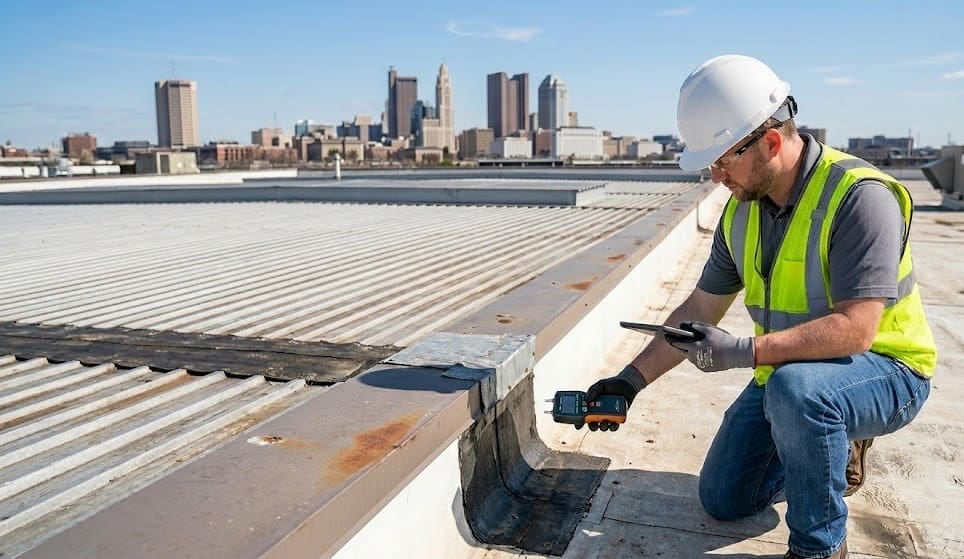
Good candidates include TPO, EPDM, modified bitumen, BUR, and metal roofs where the surface shows wear, minor rust, or UV degradation, but no major structural damage. If the membrane is fully saturated with moisture or the deck is compromised, a roof condition assessment should happen before any coating work begins.
A qualified contractor will typically check for ponding water patterns, membrane adhesion quality, flashing condition around penetrations, and core cut results showing the insulation’s moisture content. Property owners who invest in a commercial flat roof coating in Columbus, OH, and pair it with a commercial roof maintenance plan get better long-term performance from that reflective surface.
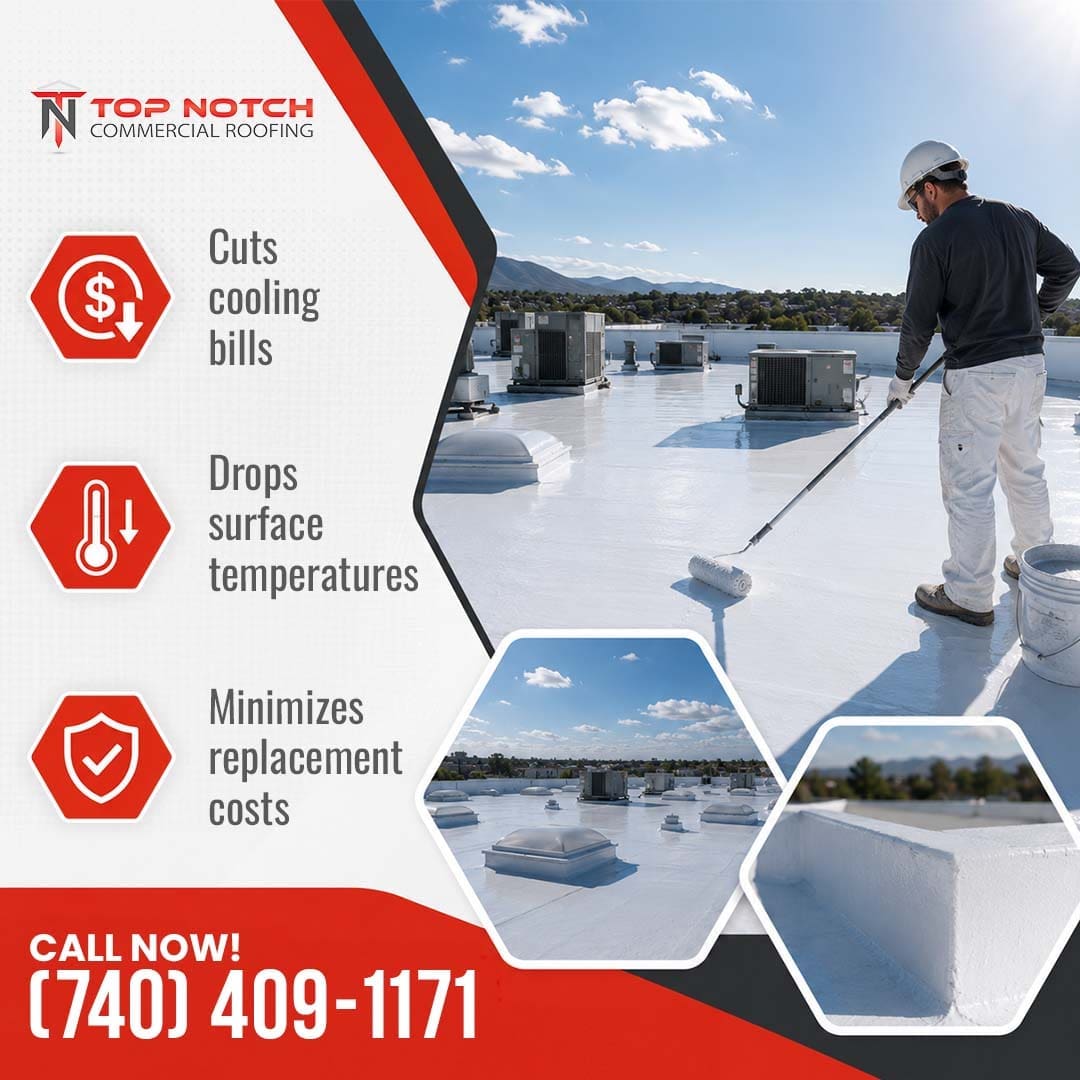
Ready to Stop Overpaying for Summer Cooling?
If your flat roof is absorbing heat and driving up utility costs, applying a reflective roof coating in Columbus, Ohio, is worth a serious conversation. Top Notch Commercial Roofing installs Conklin-certified energy-efficient roof coating systems backed by honest assessments and service that continues after the project wraps.
We serve Columbus and nearby areas, including Cambridge, Zanesville, and Athens, OH. Call us at (740) 409-1171 or reach out through our contact page to schedule a roof evaluation.