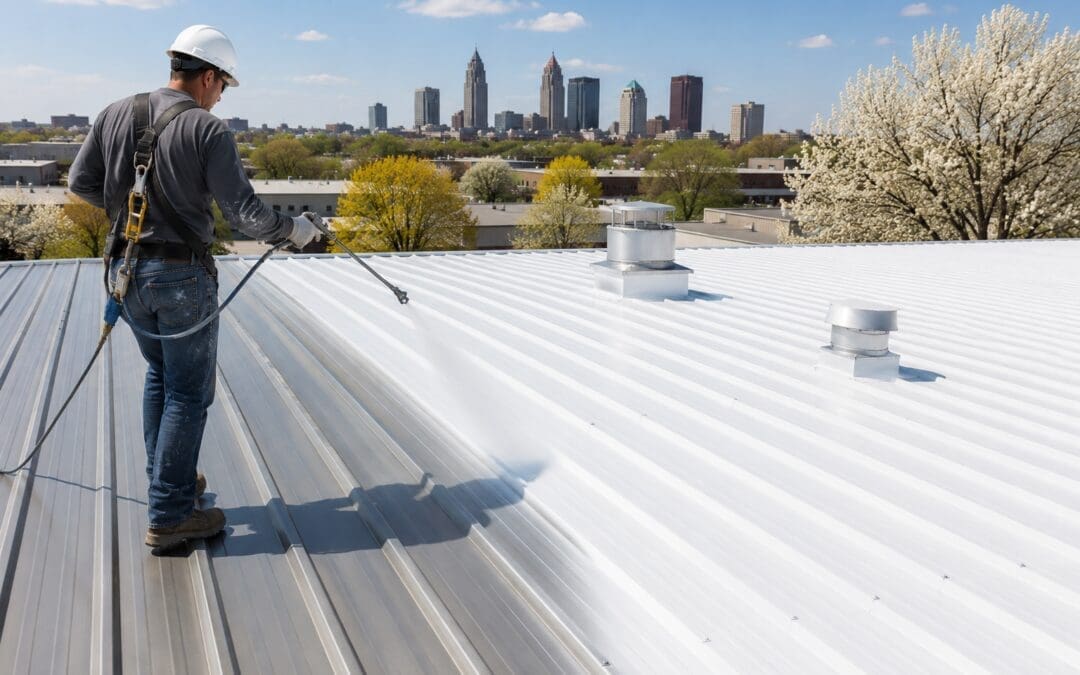
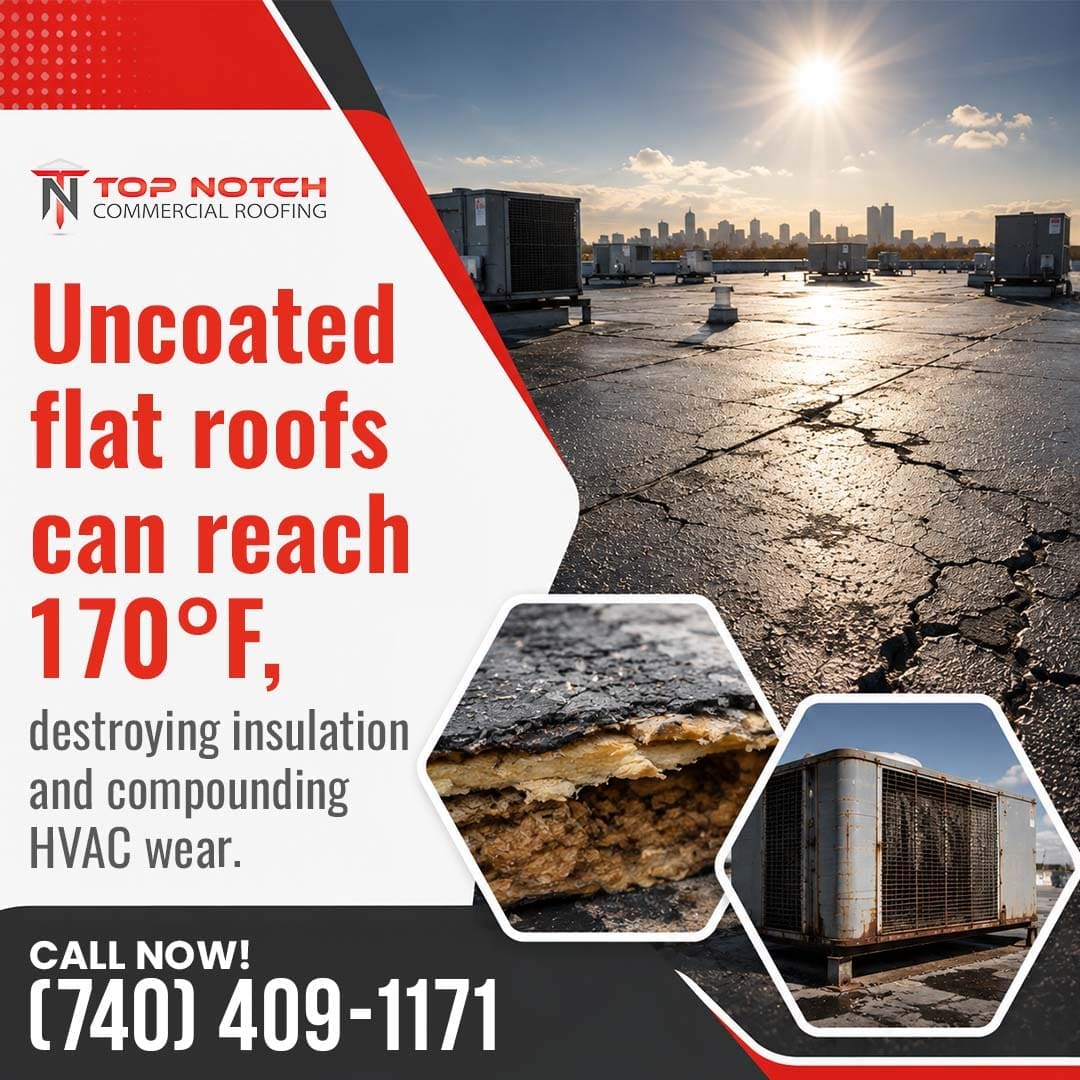
When a flat roof in Columbus absorbs peak summer heat without a reflective coating, roof surface temperatures can exceed 170°F. That heat transfers into your building’s insulation, structural deck, interior air, and HVAC system, raising operating costs, accelerating material wear, and shortening the life of both the roof and the equipment beneath it. An energy-efficient roof coating designed for Columbus, OH buildings breaks that heat transfer cycle at the surface before the damage compounds.
Key Takeaways
- Conventional dark flat roofs run 50–90°F hotter than ambient air on Columbus summer days
- Sustained heat speeds membrane degradation and insulation compression
- HVAC systems cycling harder under summer heat-load conditions wear faster and cost more to service
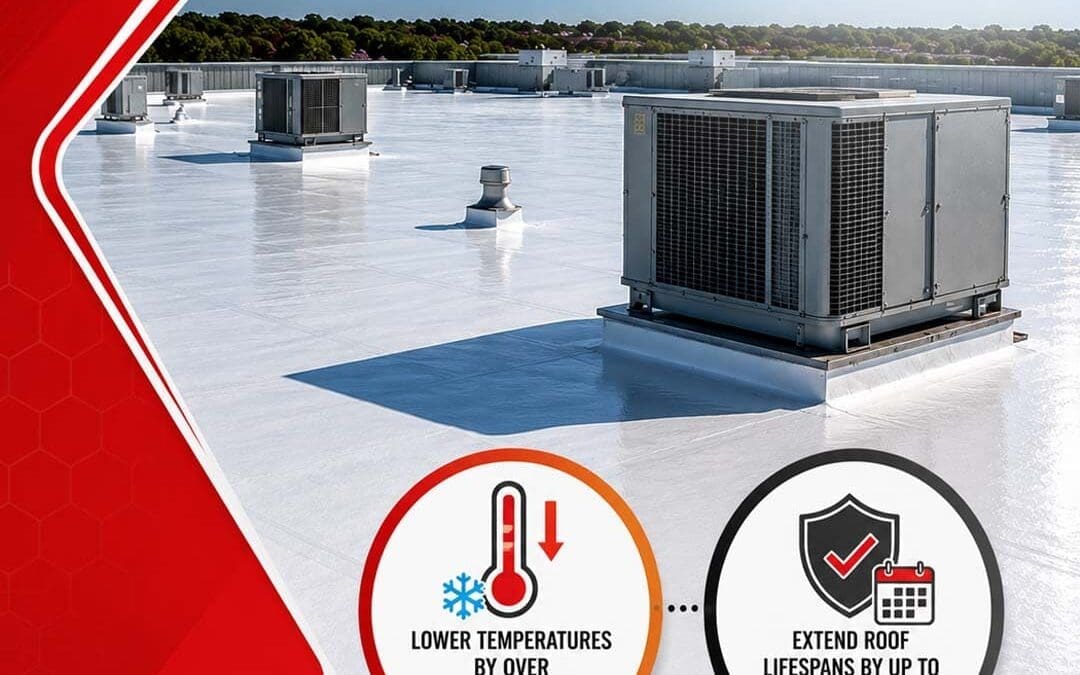
- A cool roof coating in Columbus can bring surface temperatures to within roughly 10°F of ambient air
How Hot Does an Uncoated Flat Roof Actually Get in Columbus?
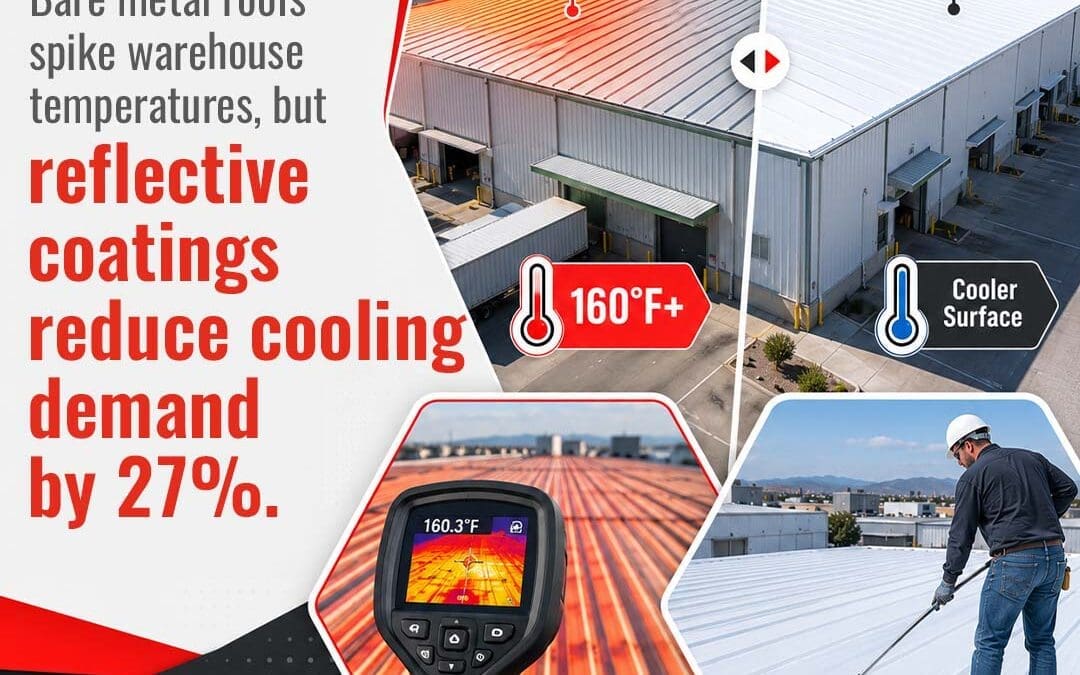
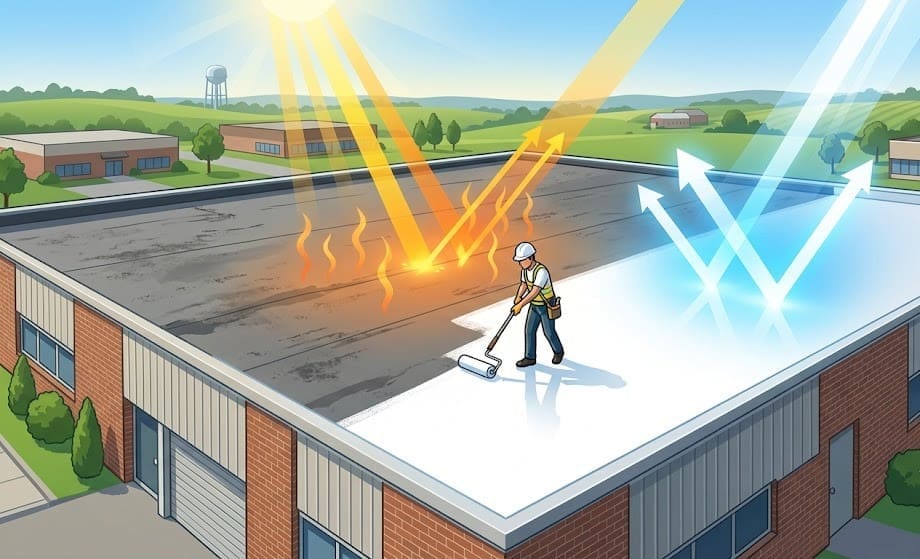
On a 90°F July afternoon in Columbus, a standard dark-membrane flat roof doesn’t sit at 90°F. According to the Lawrence Berkeley National Laboratory Heat Island Group (cited via ENERGY STAR), a clean white roof that reflects 80% of sunlight stays about 50°F cooler than a grey roof that reflects only 20% of sunlight. That means the surface temperature gap between a coated and uncoated roof on a summer day is substantial.
Our reflective roof coating in Columbus Ohio changes that equation. The table below illustrates the difference based on LBNL data:
| Roof Type | Solar Reflectance | Approximate Surface Temp Difference vs. Cool Roof |
| Dark membrane (uncoated, ~20% reflectance) | Low | Runs ~50°F hotter than a white reflective roof |
| White reflective coating (~80% reflectance) | High | Baseline (stays much closer to ambient air temp) |
That 50°F surface temperature gap drives everything that happens inside the building below.
What Does That Heat Do to Your Insulation and Roof Deck Over Time?
Prolonged heat exposure compresses roof insulation, reducing its R-value (thermal resistance) season after season. Once insulation loses density, it stops performing at the rated level, and your building loses more conditioned air through the roof assembly. An energy-efficient roof coating applied before that damage sets in helps preserve insulation performance by lowering the thermal load hitting the membrane.
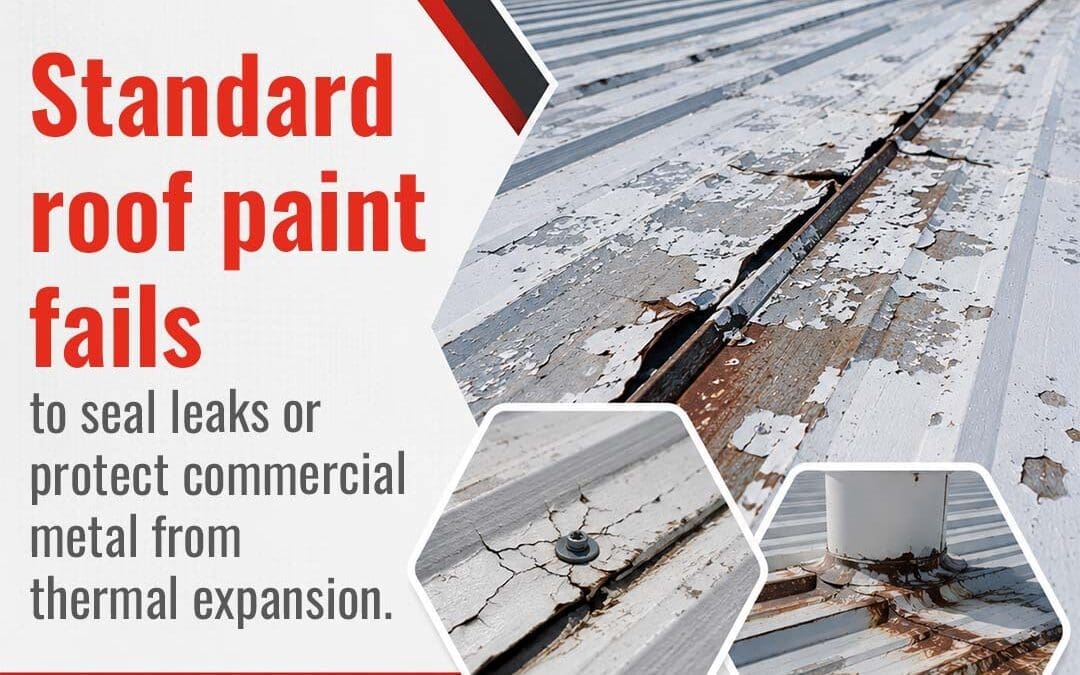
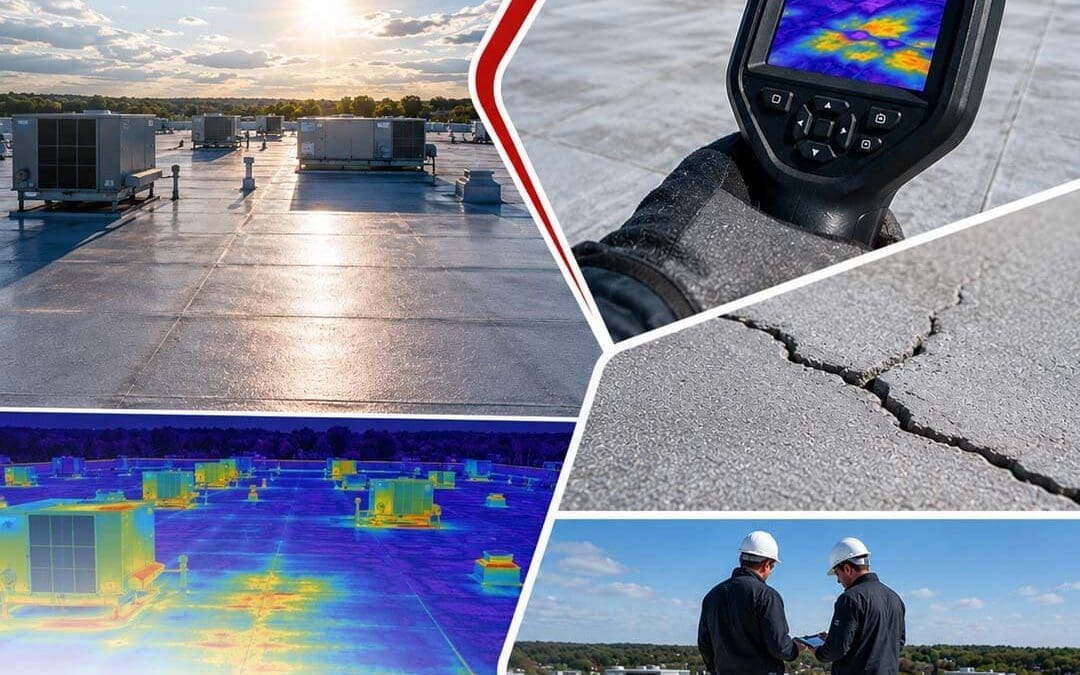
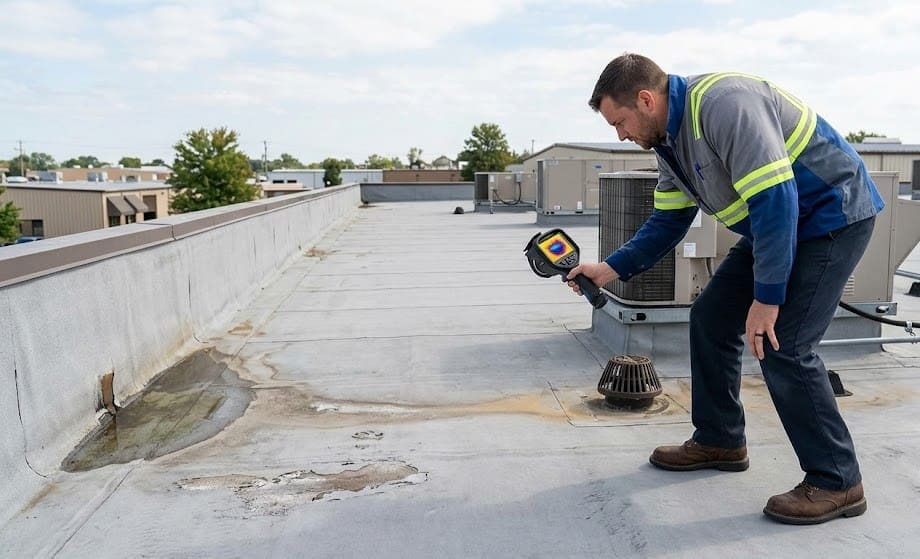
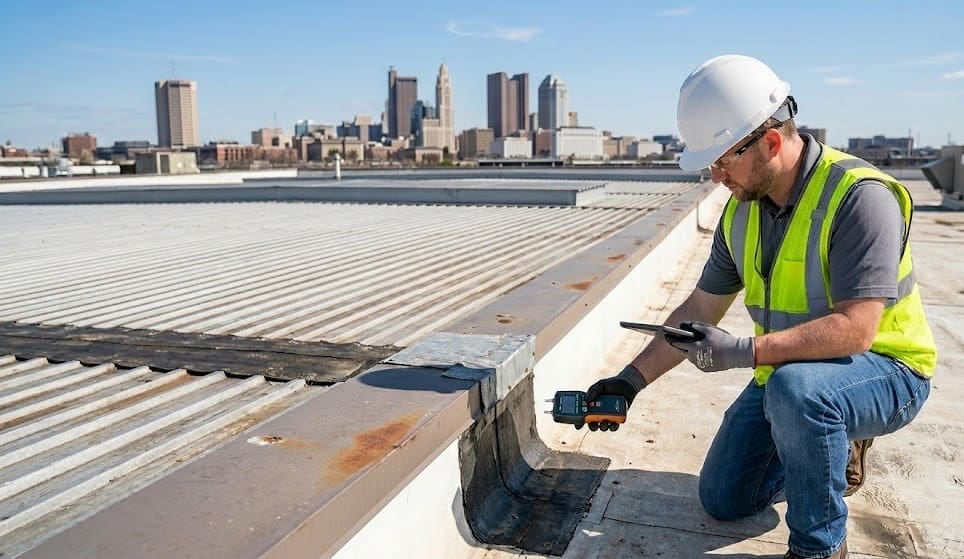
At the membrane level, UV radiation combined with sustained high temperatures accelerates cracking, blistering, and seam separation. Fasteners expand and contract through daily thermal cycling, loosening over time and creating new entry points for moisture. These are cumulative effects. They don’t show up in year one, but by year five or six on an uncoated roof, the damage is measurable. If insulation is already saturated or compressed, coating alone may not restore performance, which is why a commercial roof inspection before any coating project matters.
How Does Roof Heat Affect Your HVAC System and Monthly Utility Costs?
Your HVAC system works against your roof in summer. When roof surface heat transfers through the deck and insulation into occupied space, top-floor air temperatures can climb 2–5°F above thermostat settings. Your cooling system responds by running longer cycles, increasing compressor strain, and pulling more electricity during peak-demand billing windows.
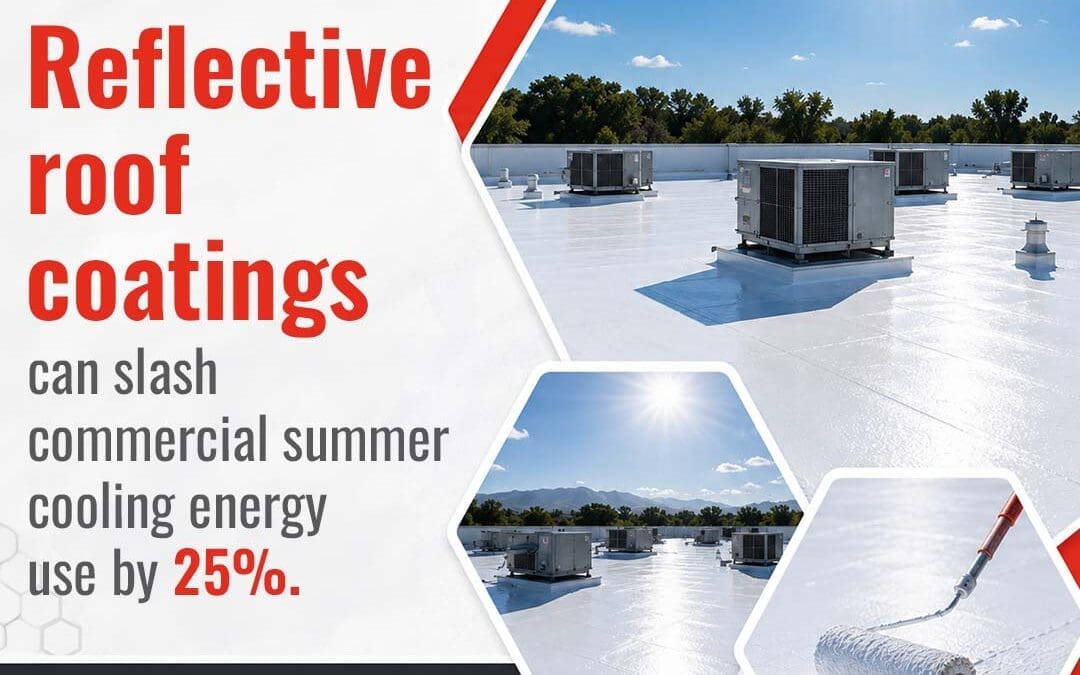
According to U.S. EPA research (Synnefa et al. 2007), cool roof reflectance can reduce peak cooling demand by 11–27% in air-conditioned buildings. Even at the lower end, an energy-efficient reflective roof coating in Columbus, Ohio, creates measurable savings. For commercial properties running multiple rooftop units, that reduction translates directly into lower monthly utility invoices and less frequent HVAC service calls. Columbus commercial roof coating energy savings at that level add up fast across a full cooling season, especially on larger flat-roof buildings where surface area compounds the heat load.
Top Notch Commercial Roofing works with Conklin-certified reflective coating systems designed to lower roof surface temperatures and cut the thermal load on your building’s interior. A cool roof coating in Columbus applied by a certified contractor addresses the problem at the roof surface before heat ever reaches your occupied space.
Is Your Flat Roof Driving Up Summer Bills From the Outside In?
Heat damage from an uncoated flat roof is gradual, but it compounds every summer. If you’re seeing rising utility costs, inconsistent indoor temperatures, or early wear on rooftop HVAC equipment, a commercial flat roof coating in Columbus, OH, may be the most cost-effective correction available.
Top Notch Commercial Roofing serves Columbus and nearby areas across Central Ohio. Call (740) 409-1171 or reach out to our team to schedule a roof evaluation and find out whether an energy-efficient roof coating is the right fit for your building.