
Spring launches the busiest bidding season for commercial roofing projects across Central Ohio. Property managers in Columbus receive multiple quotes, each promising quality work at competitive prices. The challenge isn’t getting proposals—it’s separating contractors who deliver lasting results from those who underbid and underdeliver.
When comparing bids from a commercial roof restoration contractor in Columbus, OH, the lowest price often looks tempting. But price tells only part of the story. The real test? The questions contractors can answer about surface preparation, warranty details, crew training, and contingency protocols.
This guide walks through specific questions that separate qualified restoration specialists from general roofers trying to capture seasonal work. Top Notch Commercial Roofing has built relationships across Central Ohio by welcoming these conversations, not avoiding them.
1. How Long Have You Specialized in Commercial Roof Restoration Systems?
Years in business don’t equal years in restoration. A contractor might have twenty years of tear-off experience but only two years applying coating systems. That distinction matters because restoration requires different skills than flat roof replacement.
When interviewing any commercial roofing contractor in Columbus, Ohio, ask about their restoration-specific timeline. Request details about past coating projects: building sizes, system types, and industries served. A contractor with five or more years of focused restoration experience understands how different substrates respond to coating applications.
Why Specialization Matters
General roofing work involves removing old systems and installing new ones. Restoration work preserves existing substrates while adding protective layers. A crew trained in hot tar application needs separate training for spray foam systems.
Watch for contractors who pivot to restoration during busy seasons without proper training. These teams miss the preparation steps that determine system longevity. The result? Premature failures and unexpected costs within five years.
Ask what percentage of annual revenue comes from restoration versus flat roof replacement. If restoration represents less than 40% of their work, they’re generalists offering it as an add-on service. Request project timelines from their last three restoration jobs. If timelines match replacement speeds, they’re probably skipping steps.
Every experienced commercial roofing contractor in Columbus, Ohio should demonstrate a track record of successful restoration projects with verifiable outcomes and documented performance histories across multiple building types and roof systems.
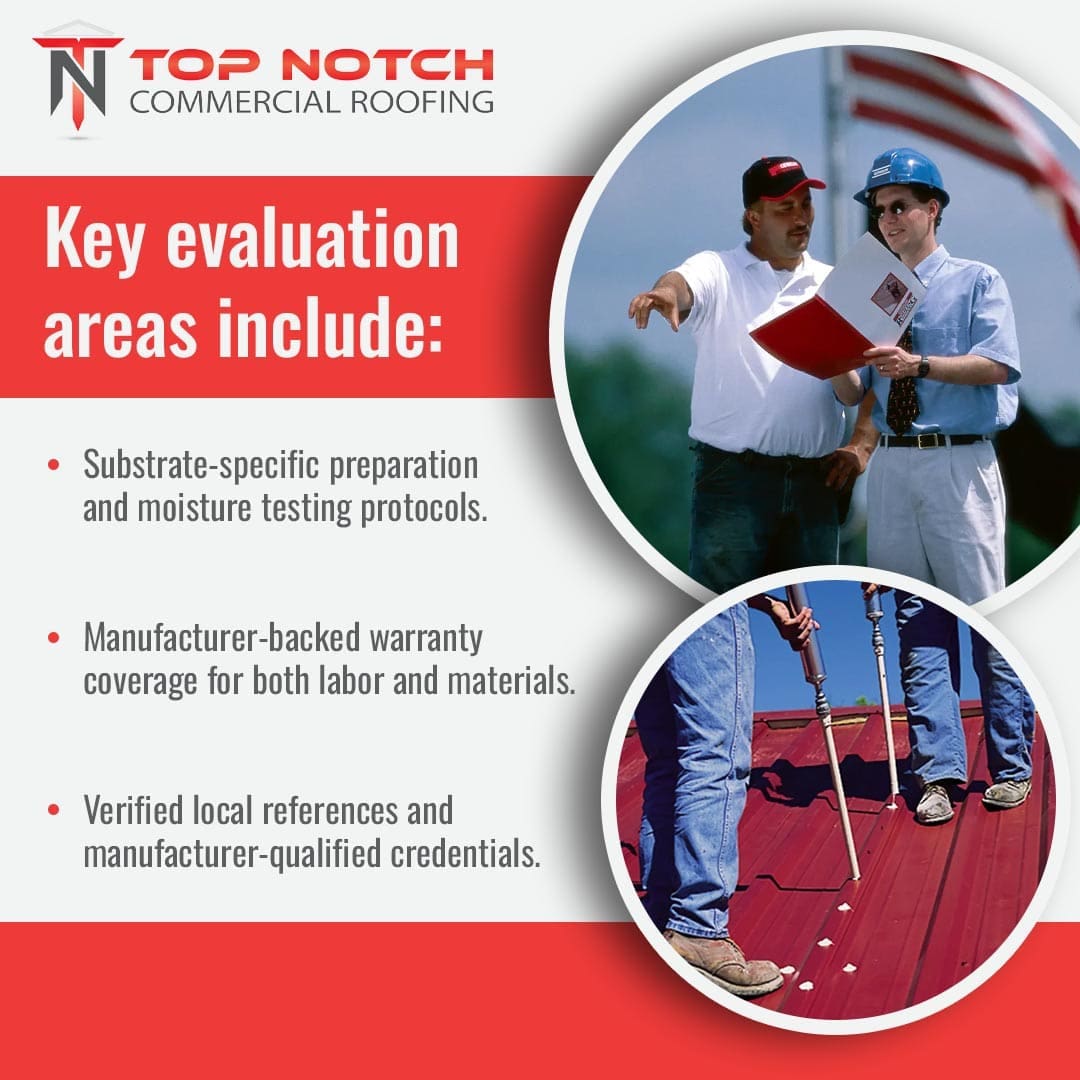
2. What Surface Preparation Methods Do You Use Before Coating Application?
Coating failure has one primary cause: inadequate surface preparation. The National Roofing Contractors Association (NRCA) updated their guidelines in 2026 specifically addressing preparation steps as the foundation of successful coating performance. Yet surface prep is where contractors cut corners under budget pressure.
When you ask any flat roof restoration contractor in Columbus, OH about their preparation process, listen for specifics. They should mention equipment types, cleaning products, cure times, and adhesion testing. Vague answers about “cleaning everything really well” signal inexperience.
Critical Moisture Testing Requirements
Moisture meters are non-negotiable. Coatings applied over wet substrates trap moisture, leading to blistering and premature failure. Ask what moisture threshold triggers a project delay. Silicone coatings typically require substrate moisture content below 25%. Acrylic coatings need drier conditions, usually below 20%.
Every qualified flat roof restoration contractor in Columbus, OH should provide detailed moisture testing protocols and documentation showing substrate conditions meet manufacturer specifications before coating application begins.
Substrate-Specific Preparation Protocols
| Substrate Type | Key Prep Steps | Moisture Limits | Timeline |
| TPO/PVC | Solvent cleaning, seam inspection, flash-off | <20% | 2-3 days |
| EPDM | Power washing, primer application, cure time | <25% | 3-4 days |
| Modified Bitumen | Pressure washing, granule removal, repairs | <25% | 3-5 days |
| Metal | Rust removal, power washing, oil cleaning | Completely dry | 2-4 days |
| Built-up Roof | Aggregate removal, substrate repairs, prime coat | <20% | 4-6 days |
A commercial roof coating company in Columbus, OH that treats all substrates the same hasn’t invested in proper training. EPDM membranes often require primers unnecessary for TPO. Metal roofs need rust inhibitors before coating application.
Real-world example: An aged EPDM membrane loses flexibility over time. Without proper primer application, coatings won’t bond to the degraded surface. The coating might look good initially but will start peeling within months. Any experienced commercial roof coating company in Columbus, OH will emphasize the importance of substrate-specific preparation protocols for long-term performance.
3. What Does Your Warranty Cover That Your Competitor’s Doesn’t?
Warranty discussions separate professional contractors from those banking on customer confusion. Coating manufacturers offer material warranties ranging from 10 to 20 years, protecting against product defects but not covering labor costs if repairs become necessary. Contractor workmanship warranties cover installation quality and typically run 2 to 5 years. You need both.
The Labor Coverage Gap
Material-only warranties create expensive surprises. Ask what happens if the coating fails in year three. Does the warranty cover just the coating material, or include labor to remove the failed system, reapply coating, and restore the roof?
Calculate your potential labor exposure on a 10,000 sq ft roof:
- Failed coating removal: $2-4 per sq ft
- Surface preparation: $1.50-3 per sq ft
- New coating application: $3-6 per sq ft
- Total labor cost: $65,000-$130,000
For any roof restoration in Columbus, Ohio project, this exposure can equal or exceed your original restoration investment.
Five Warranty Questions Property Managers Must Ask
- What’s covered under material warranty versus workmanship warranty? Manufacturers cover product defects like premature degradation. They don’t cover application errors or substrate failures. Workmanship warranties cover installation errors like improper surface prep or incorrect application thickness.
- What specific conditions void either warranty? Common conditions include unauthorized repairs, failure to complete required annual inspections, building modifications affecting the roof, use of incompatible sealants, and ponding water persisting more than 48 hours.
- Who performs warranty inspections and at what cost? Some warranties require annual inspections by the installing contractor at your expense ($300-800 per inspection). Over 15 years, paid inspections add $7,500 versus $0 for included inspections.
- What’s the claim response timeline? Professional contractors should specify maximum response time to warranty claims (24-72 hours), inspection scheduling within 5-7 business days, and decision timeline (10-15 business days). Ask how many warranty calls the contractor handled in the past three years.
- Is the warranty transferable if we sell the property? Non-transferable warranties create complications during property sales. Some transfer automatically at no cost. Others require transfer fees ($500-2,000) or manufacturer approval. Before committing to any roof restoration in Columbus, Ohio, verify warranty transferability terms in writing.
Warranty Coverage Comparison
| Warranty Type | Material Coverage | Labor Coverage | Inspection Cost | Transfer Fee |
| Standard | 10-15 years prorated | Not included | $7,500 (15 yrs) | $1,000 |
| Enhanced | 10-15 years full | 5 years | Included | $0 |
| Premium | 20 years full | 10 years full | Included | $0 |
Watch for warranties requiring annual inspections by the installing contractor only. This creates vendor lock-in, eliminating competitive pricing options.
4. Can You Provide References from Columbus-Area Property Managers Who Choose Restoration Over Replacement?
Local references matter because they’ve worked with the same weather conditions and faced similar substrate challenges as your building. Request buildings similar in size to yours, projects using the same roof substrate, and properties of comparable age.
The Reference Call Script
When calling references from flat roof repair companies, ask specific questions revealing contractor behavior under pressure:
- Did the project timeline match the original estimate?
- How did the contractor communicate when unexpected substrate damage appeared?
- What surprised you most during the project?
- Has the contractor responded to any service calls since completion?
- Would you hire them again?
Pay attention to references mentioning the bidding process. The contractor who takes time to educate during bidding usually delivers better project communication. Red flags emerge when contractors only offer references from 10 or more years ago.
Before selecting from competing flat roof repair companies, verify that references come from similar building types and restoration scenarios matching your project requirements. Ask references specifically whether they considered replacement but chose restoration based on the contractor’s recommendations and cost-benefit analysis.
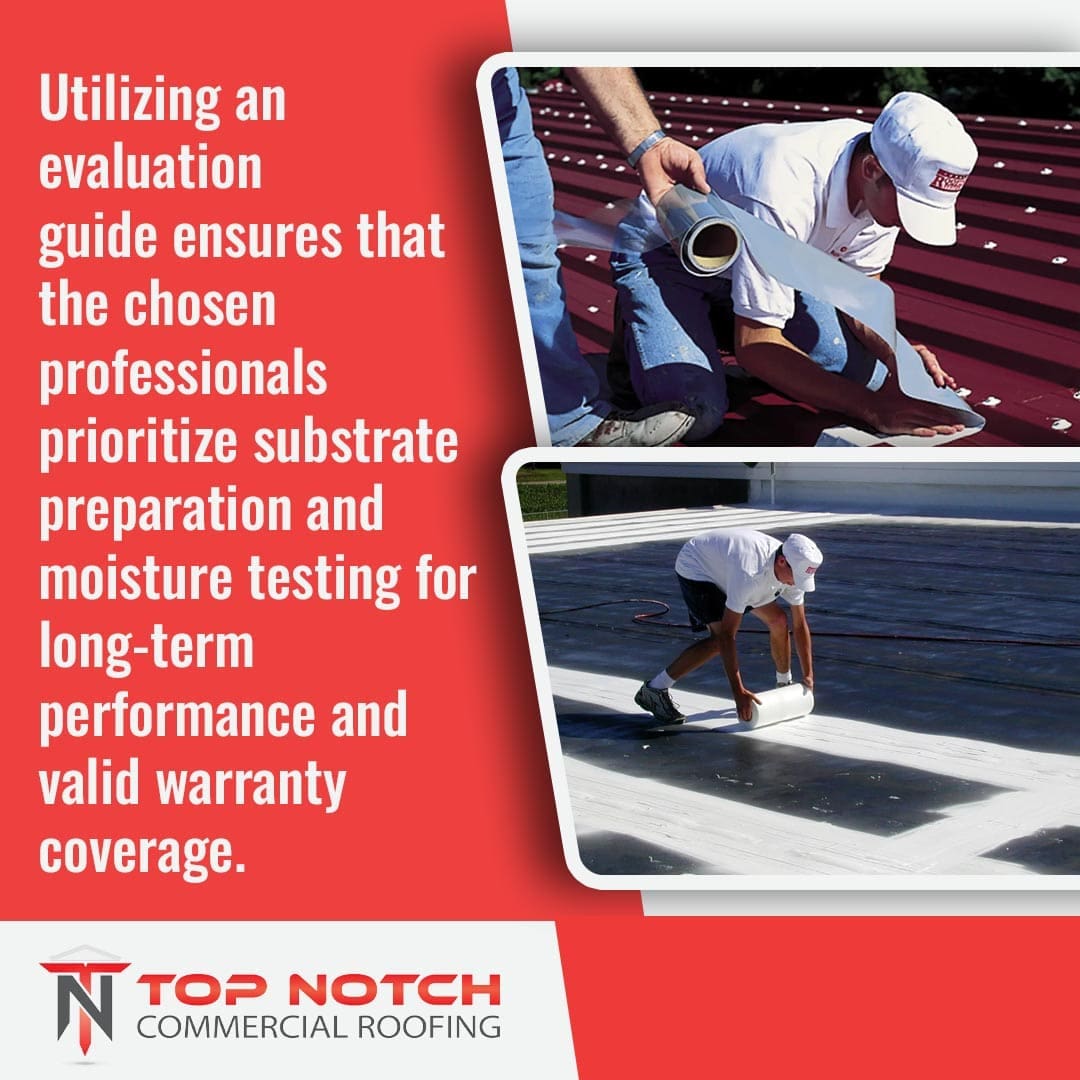
5. How Do You Handle Unexpected Substrate Damage Discovered During Prep?
Coatings expose problems that visual inspections miss. Power washing reveals hidden cracks. Removing ballast stones exposes membrane deterioration. Moisture testing identifies saturated insulation. Every restoration project encounters unexpected damage.
The question isn’t whether surprises will happen—it’s how contractors price and communicate unknowns. Legitimate flat roof specialists near me use contingency protocols that balance cost protection with project flexibility.
Why “Repair Allowances” Protect Both Parties
Fixed-price bids including “all necessary repairs” present two problems. Either the contractor padded the price to cover worst-case scenarios (you’re overpaying), or they’ll skip repairs to protect their margin (your coating fails prematurely).
Better approach: Request unit pricing for common repair scenarios. Ask what they charge per linear foot for seam repairs, per square foot for membrane patching, or per penetration for flashing replacement. Unit pricing creates transparency.
Establish approval thresholds. At what dollar amount does the contractor need your sign-off before proceeding? Common thresholds range from $500 to $5,000. Experienced flat roof specialists near me will have clear protocols for handling discoveries and obtaining approvals without delaying project timelines.
The Change Order Process
Ask about documentation practices when repairs extend beyond original scope. Do they photograph damaged areas before and after repair? Do they provide moisture readings showing why additional work was necessary?
Timeline communication separates professional flat roofing companies from reactive ones. When do you receive notification about discovered damage? Can you authorize repairs by email, or is in-person approval required?
Common hidden issues and typical responses:
| Discovered Issue | Professional Response | Cost Range |
| Saturated insulation | Remove wet sections, dry substrate, replace | $15-25 per sq ft |
| Failed seams | Cut and remove failed sections, install new membrane | $8-15 per linear ft |
| Rusted metal panels | Replace damaged panels, treat surrounding rust | $20-35 per panel |
| Deteriorated flashing | Remove old flashing, install new termination | $12-18 per linear ft |
When evaluating bids from flat roofing companies, prioritize those with transparent change order processes and detailed documentation standards over those offering vague promises about handling surprises.
Addressing Active Leaks During Restoration
If moisture testing reveals active flat roof leak issues during the preparation phase, contractors should provide immediate temporary repairs to prevent further damage while the restoration work proceeds. Ask how they handle active leaks discovered mid-project and what additional costs might apply.
Addressing any flat roof leak properly before coating application is non-negotiable. Coating over active leaks or water-damaged areas guarantees system failure and voids manufacturer warranties. Professional contractors will never proceed with coating until all moisture intrusion points are identified and properly repaired.
6. What Training and Certifications Do Your Crew Members Hold?
Manufacturer certifications verify product-specific training. A Qualified Applicator certification means the crew member completed hands-on training with that coating manufacturer. These aren’t marketing terms—they’re verifiable credentials with performance requirements.
OSHA compliance isn’t optional for commercial work in Ohio. At minimum, expect OSHA 10 certification. Larger projects often require OSHA 30 certification for supervisors.
What Key Certifications Verify
| Certification Type | What It Verifies | How to Confirm |
| Manufacturer Qualified Applicator | Product-specific installation training | Request applicator number |
| Manufacturer Preferred Contractor | Volume requirements, warranty claim history | Check manufacturer’s contractor locator |
| OSHA 10/30 | Safety training completion | Request certification card copies |
Ask whether the contractor uses subcontractors. How are they vetted? Do they hold the same certifications as in-house crews? Top Notch Commercial Roofing maintains trained in-house crews specifically to control quality across all restoration phases.
Watch for the owner-certified, crew-untrained dynamic. The business owner completed manufacturer training, but the crew members applying your coating never attended those programs. Quality control suffers when knowledge doesn’t transfer from owner to field teams.
Ask how long crew members have worked for the company. Teams with low turnover deliver more consistent results.
Understanding the Real Value of Roof Coatings
Research from the U.S. Department of Energy shows that conventional dark roofs can reach temperatures of 150°F or more on sunny summer afternoons, while reflective coated roofs under the same conditions can stay more than 50°F cooler.
The Lawrence Berkeley National Laboratory Heat Island Group documented that a clean white roof reflecting 80% of sunlight will stay about 55°F cooler than a gray roof reflecting only 20% of sunlight. These represent measurable reductions in heat transfer into your building, lower cooling costs, and extended roof service life.
When contractors present coating options, ask them to reference specific solar reflectance values and thermal emittance ratings. Top Notch Commercial Roofing provides detailed product specifications with every proposal, including reflectance data and expected temperature reductions for your specific building type.
Get Straight Answers from a Contractor Who Welcomes These Questions
The right commercial roof restoration contractor in Columbus, OH doesn’t dodge difficult questions. They welcome detailed discussions about preparation protocols, warranty coverage, crew training, and contingency planning. These conversations reveal competency and build confidence in your contractor selection.
Top Notch Commercial Roofing provides detailed preparation protocols, transparent warranties, and Columbus-area references as standard practice. Our crews maintain manufacturer certifications, and we explain change order processes before projects start. We serve property managers and building owners across Columbus, Cambridge, Zanesville, Athens, and nearby areas throughout Central Ohio.
Compare contractors on substance, not just price per square foot. The lowest bid often becomes the most expensive choice when coating failures require premature replacement. Request proposals addressing every question in this guide.
Ready to have these conversations? Call (740) 409-1171 to discuss your commercial roof restoration project. You can also reach out to our team to request a thorough proposal covering preparation methods, warranty details, crew credentials, and contingency protocols.
Spring bidding season brings competitive pricing, but rushed decisions create long-term problems. Take time to ask these questions. Your building deserves contractors who welcome accountability.


