The most common problems metal roofing contractors find on neglected commercial roofs are backing-out fasteners, failed lap seams with open gaps, surface rust that has progressed to through-corrosion on panel edges, and blocked drainage that pools water against the eave. Each of these issues is preventable with routine inspection but expensive to correct once structural damage takes hold. Top Notch Commercial Roofing identifies and addresses these conditions across commercial metal buildings in Salesville, OH and nearby areas.
Key Takeaways:
- Fastener back-out is the leading source of metal roof leaks on through-fastened systems
- Failed seam sealant is the second most common leak source on standing seam and R-panel roofs
- Surface rust progresses to through-panel corrosion within 3 to 7 years without treatment in Ohio’s climate
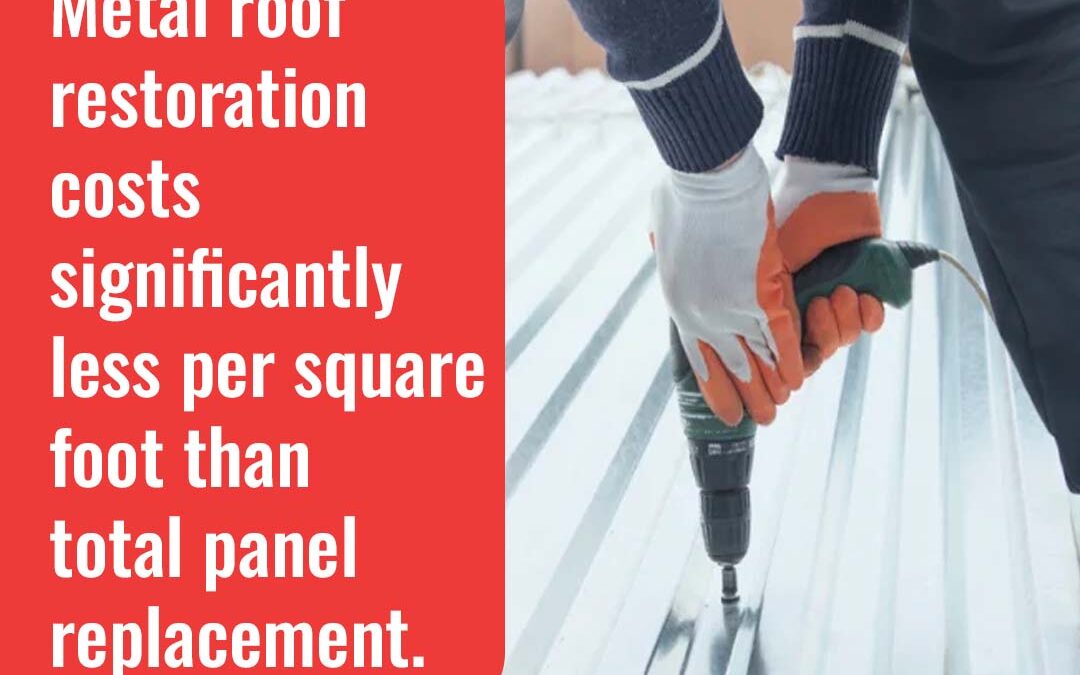
- A roof coating applied before rust reaches the through-panel stage costs 60% to 75% less than panel replacement
Why Do Exposed Fasteners Cause So Many Metal Roof Leaks?
On a through-fastened metal roof, every screw penetration is sealed by a neoprene washer that compresses between the screw head and the panel surface. Over time, thermal expansion and contraction cycles loosen fasteners and degrade those washers. Once the seal breaks, water enters at every compromised point.
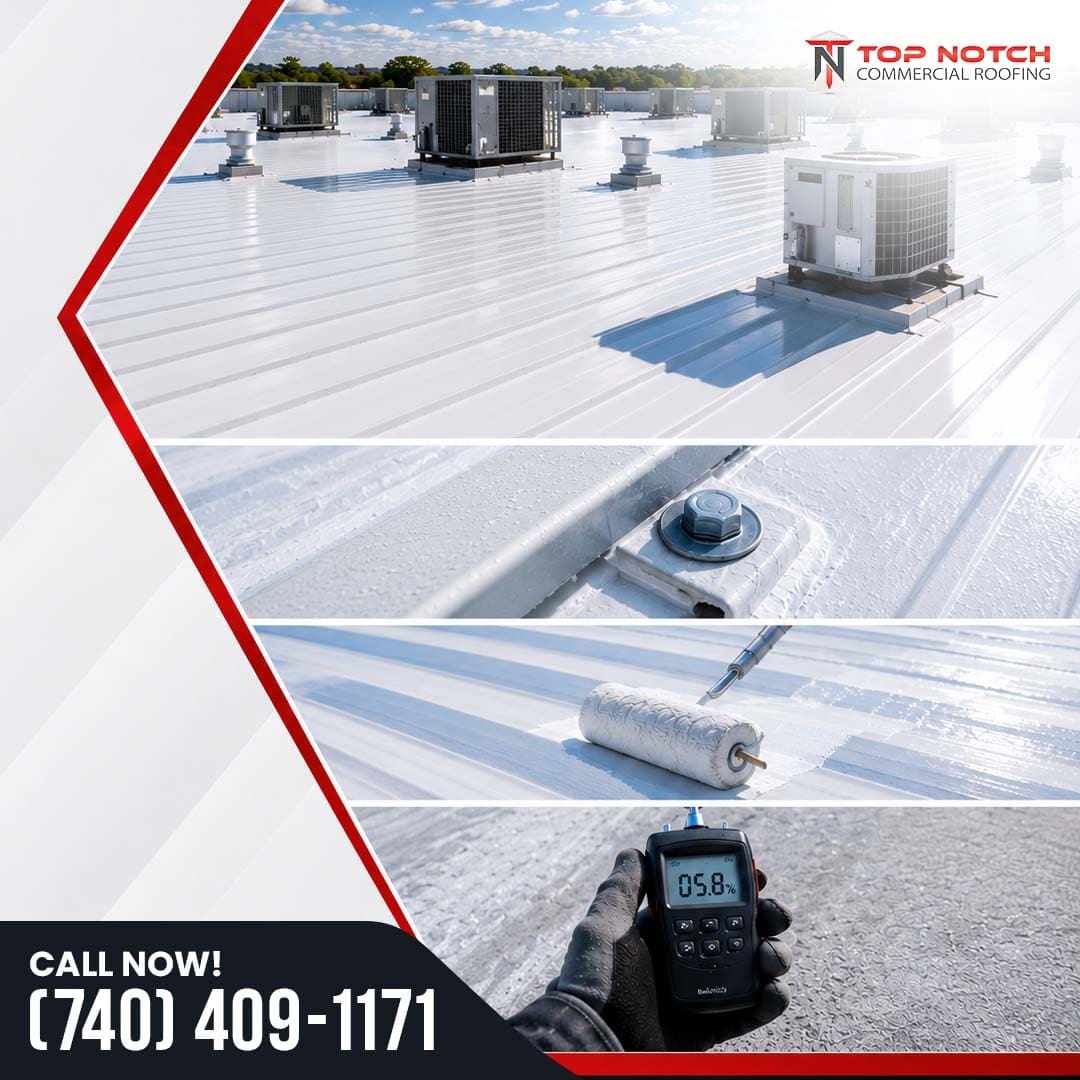
A typical 10,000 sq ft through-fastened metal roof has 1,500 to 2,500 fastener penetrations. Each one is a potential leak point if the washer deteriorates. According to the Federal Highway Administration (FHWA), Ohio experiences approximately 110 air freeze-thaw cycles per year, and every cycle drives another round of expansion and contraction through those panels and fasteners.
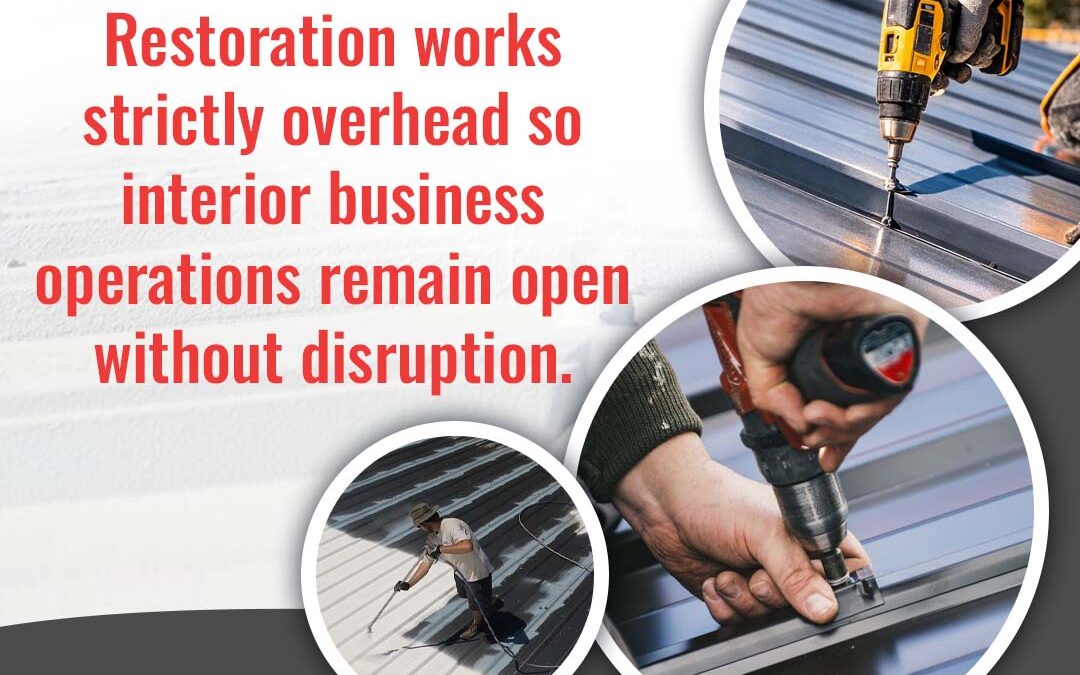
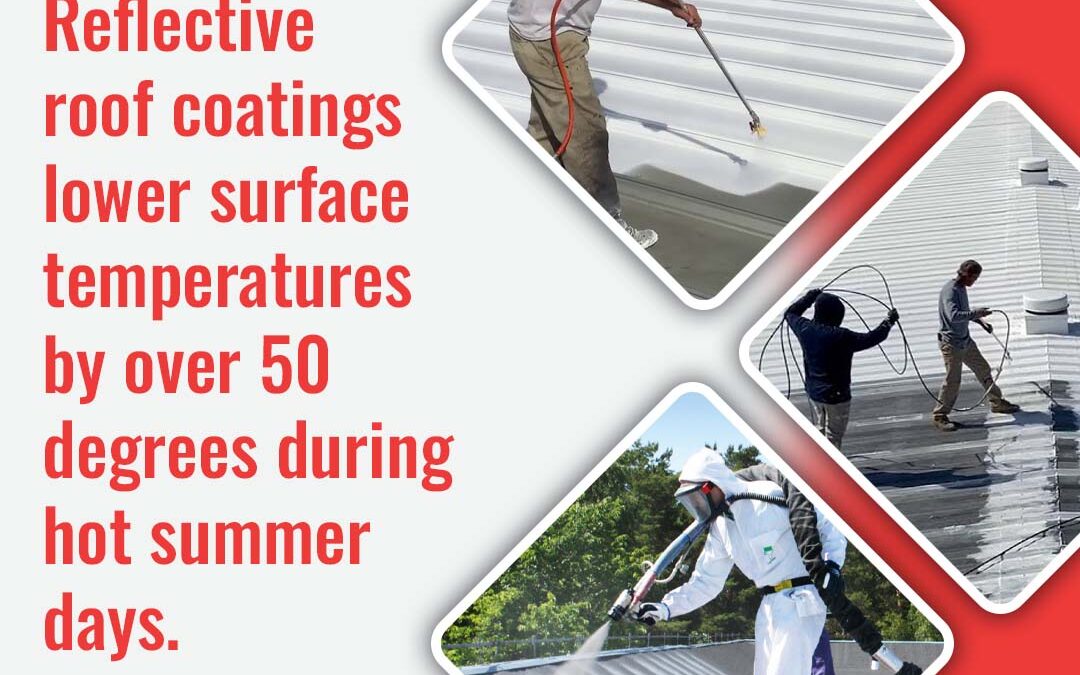
During metal roof repair, metal roof installers either replace individual fasteners and washers (targeted repair) or seal all fasteners with elastomeric sealant as part of a full restoration. Top Notch Commercial Roofing’s restoration process includes sealing every fastener with Kwik Kaulk® before applying the Conklin MR System® coating.
What Happens to Metal Roof Seams When Maintenance Is Skipped for Years?
Lap seams on metal roofs rely on sealant to block water at every panel overlap. UV exposure, thermal movement, and vibration cause that sealant to shrink and crack over time. Once a seam opens, water migrates inside the panel overlap and can travel laterally before showing up as interior damage far from the original entry point.
| Years of Deferred Maintenance | Typical Seam Condition | Likely Path |
| 1 to 3 years | Sealant cracking, minor gaps | Re-seal and spot metal roof repair |
| 3 to 7 years | Open seams, early rust at overlaps | Fabric reinforcement and coating restoration |
| 7+ years | Corroded overlaps, substrate damage | Partial or full panel replacement |
The longer seam repairs are deferred, the more expensive the correction becomes. When Top Notch Commercial Roofing performs a coating restoration, a qualified roof coating contractor addresses seam reinforcement with Spunflex® fabric embedded in a base coat before applying the protective top coat, stopping the progression before panel replacement becomes the only option.
At What Point Does Surface Rust Make Coating Impossible Without Panel Replacement?
Rust on a commercial metal roof moves through three stages:
- Surface oxidation: Discoloration and light rust film. Fully treatable with primer and coating.
- Pitting corrosion: Rust has penetrated the panel surface. Still coatable if metal thickness remains structurally sound.
- Through-panel perforation: Holes visible or detectable by light test. Coating alone will not restore structural integrity.
Experienced metal roof installers and metal roofing contractors evaluate rust severity using scrape tests, thickness gauges, and adhesion pull tests. The general tipping point: once through-panel perforation affects more than 15% to 20% of a panel’s surface area, a roof coating contractor cannot restore it. That panel needs to be replaced.
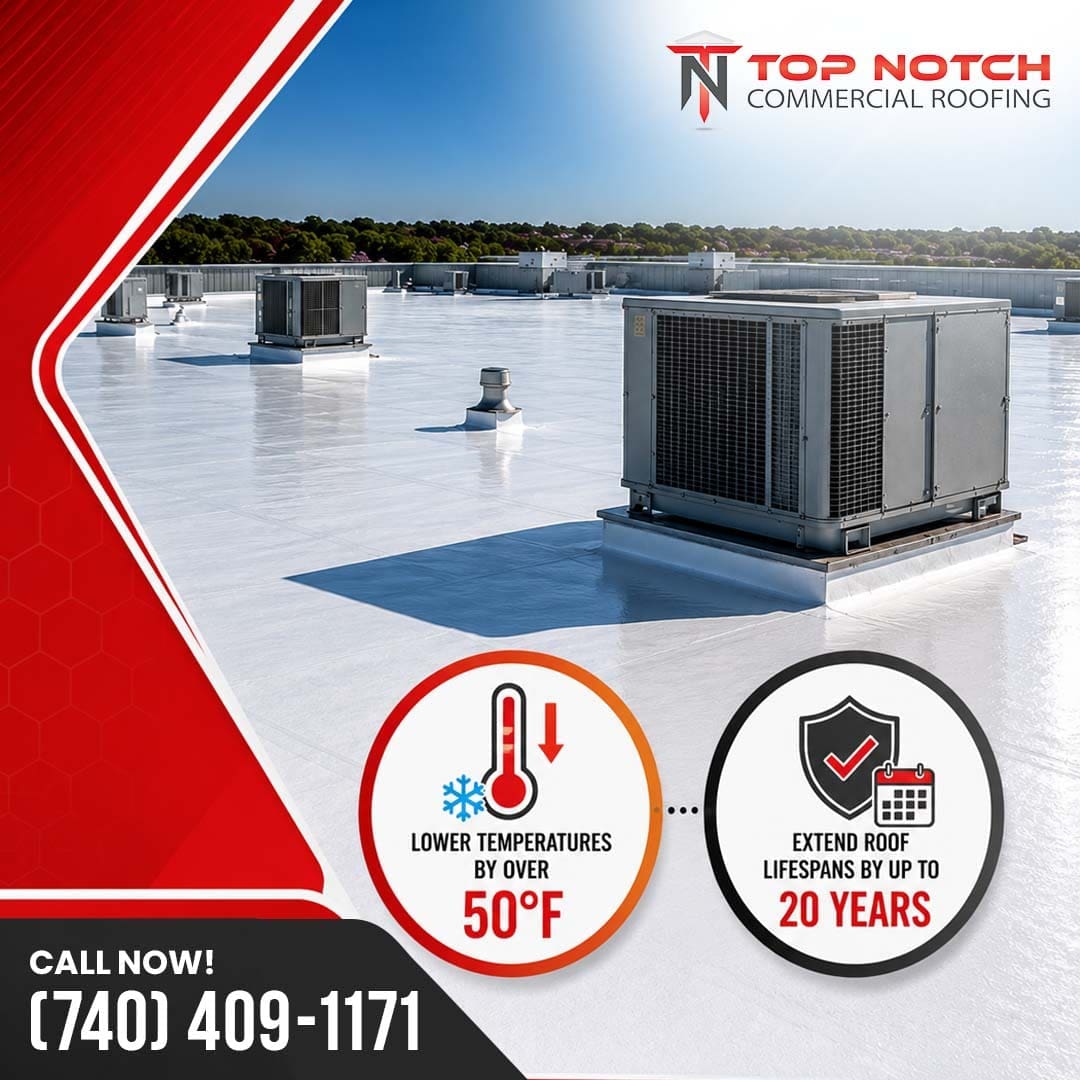
The window between stage one and stage three in Ohio’s humid, freeze-thaw climate is typically 3 to 7 years. Top Notch Commercial Roofing catches rust at the coating-eligible stage through documented inspections and the Conklin MR System® metal roof restoration process.
Don’t Wait Until Surface Rust Becomes a Structural Problem.
If your commercial metal roof in Salesville, OH, shows fastener deterioration, open seams, or spreading rust, the repair window narrows with every season. Top Notch Commercial Roofing provides certified inspections using the Conklin restoration protocol, honest communication on what your roof needs, and ongoing support after the project is complete. Call (740) 409-1171 or schedule your assessment online.